Break Your Phone Checking Habit: The Choice Architecture Method
69% of people check their phone within five minutes of waking up. It’s not that they are weak or lack discipline. But the billion-dollar corporations employ teams of addiction engineers whose entire job is to make sure you do exactly that.
You think this is a willpower problem.
No, it’s not.
It’s an architecture problem.
The average person checks their phone 205 times per day. Once every five minutes, they’re awake.
Your prefrontal cortex, the brain region responsible for impulse control and decision-making, never had a chance against systems specifically designed to bypass it. Tech companies don’t want your attention.
They want your inability to direct it anywhere else.
Here’s what nobody tells you: your phone isn’t the enemy. The choice architecture designed by addiction engineers is. And once you understand how it works, you can dismantle it.
The Dopamine Trap You Didn’t Build
Your brain has a neurological seesaw called the pleasure-pain balance. When you experience pleasure, your brain immediately counteracts it by tipping the balance toward pain. It’s called opponent-process theory, and it’s why the fifth scroll through Instagram feels worse than the first.
Anna Lembke, a Stanford psychiatrist studying addiction, describes what happens with chronic smartphone use: your brain enters a dopamine deficit state. You’re not reaching for your phone because it feels good anymore. You’re reaching for it because not having it feels terrible. The baseline has shifted. You need the device just to feel normal.
This isn’t accidental. When adolescents with internet addiction undergo brain scans, researchers observe increased activity in the default mode network and decreased connectivity in regions controlling memory and decision-making. Your brain is literally reorganizing itself around the phone.
Tech companies know this. They have departments dedicated to maximizing what they call “engagement” (a sanitized word for exploitation). Variable reward schedules. Endless scroll. Autoplay features. Notification badges. Every element is tested, optimized, and deployed to trigger dopamine release and keep you checking.
The truth they won’t tell you: these systems were built by people who studied how slot machines work. The difference is that casinos close. Your phone never does.
You didn’t design this trap. But you can escape it.
The 30-Day Architecture Overhaul
Here’s where conventional advice fails you. Everyone says “use your phone less” or “practice digital moderation.” That’s like telling someone to moderately use a slot machine. When you’re fighting engineered addiction, moderation is a trap.
You need a reset. A complete one.
Research on digital detox shows that brain resensitization begins within 48 to 72 hours of reduced stimulation. Within two to four weeks, people experience measurable improvements in attention, mood regulation, and cognitive function. Full dopamine baseline recovery typically occurs within three to four weeks.
This is the 30-Day Dopamine Reset Protocol: complete abstinence from addictive digital behaviors. Not all technology—that’s impractical and unnecessary. But the specific apps and behaviors that have hijacked your reward system need to go completely for one month.
Why does abstinence work when moderation doesn’t? Because your brain needs time to remember what natural rewards feel like. When you reduce digital overstimulation, the brain starts producing dopamine through walking, conversation, purposeful tasks, and real accomplishment. Activities that seemed boring during chronic phone use suddenly become engaging again.
The contrarian truth: a 30-day hard reset is easier than trying to moderate daily for years.
Chronic decision fatigue from constantly negotiating with yourself about phone use is exhausting. Thirty days of “no” is one decision. Thirty days of “maybe, but just a little” is thousands of microdecisions you’ll lose.
Environmental Engineering 101
Willpower is a terrible foundation for behavior change. Environment is everything.
A Penn State study found that simply keeping your phone in another room increases cognitive capacity by 10 percent. Not turning it off. Not putting it in a drawer. Just being in a different room. That’s how much mental bandwidth your phone consumes even when you’re not touching it.
Here’s your new architecture:
The Out-of-Sight Protocol: Your phone lives in a different room when you’re working, sleeping, or spending time with people. If you can see it, your brain is tracking it. If your brain is tracking it, you’re not fully present anywhere else.
The Phone Foyer: Plug your phone in at the entrance of your home. It never travels beyond that point. Your house is a phone-free zone except for the 30 minutes you allocate for intentional use. You go to your phone. Your phone doesn’t come with you.
Lock Boxes: For specific high-stakes windows (deep work sessions), family meals, sleep - physically lock the phone away. A $15 kitchen timer lock box removes the decision entirely. You can’t check what you can’t access.
Grayscale Mode: Turn your screen to black and white. Color activates the brain’s reward system. Removing it makes the phone visually dull and substantially less compelling.
I personally use "Grayscale Mode".
Notification Purge: Your lock screen should be empty. Every notification is a dopamine pull engineered to break your focus. Turn off everything except calls and texts from actual humans you care about. Adherence is 58% higher with environmental design than with willpower-only approaches.
Now add temporal boundaries.
Tech-Free Times: Three non-negotiable windows define your day.
The first hour after waking - no screens. Get sunlight instead. This calibrates your circadian rhythm and sets cortisol patterns correctly.
The last hour before bed - screens suppress melatonin and keep cortisol elevated, destroying sleep quality.
And mealtimes - the oxytocin from real connection beats the dopamine from scrolling.
Tech-Free Zones: Your bedroom is a device-free space. So is your dining table. If you work from home, designate your workspace as phone-free during work blocks. These spatial boundaries create environments where different behaviors are automatic.
(This is where I transition to a sales pitch for a second).
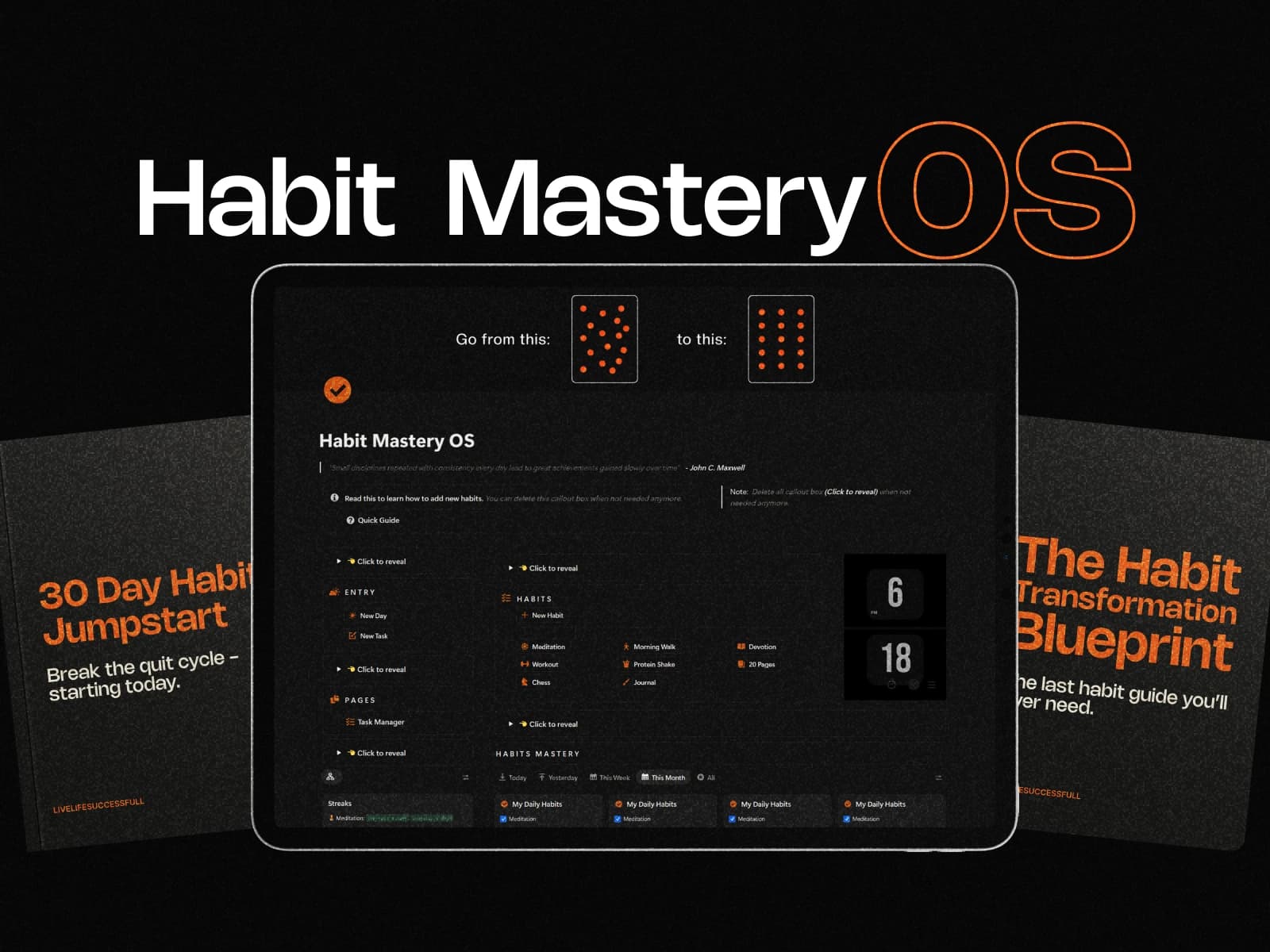
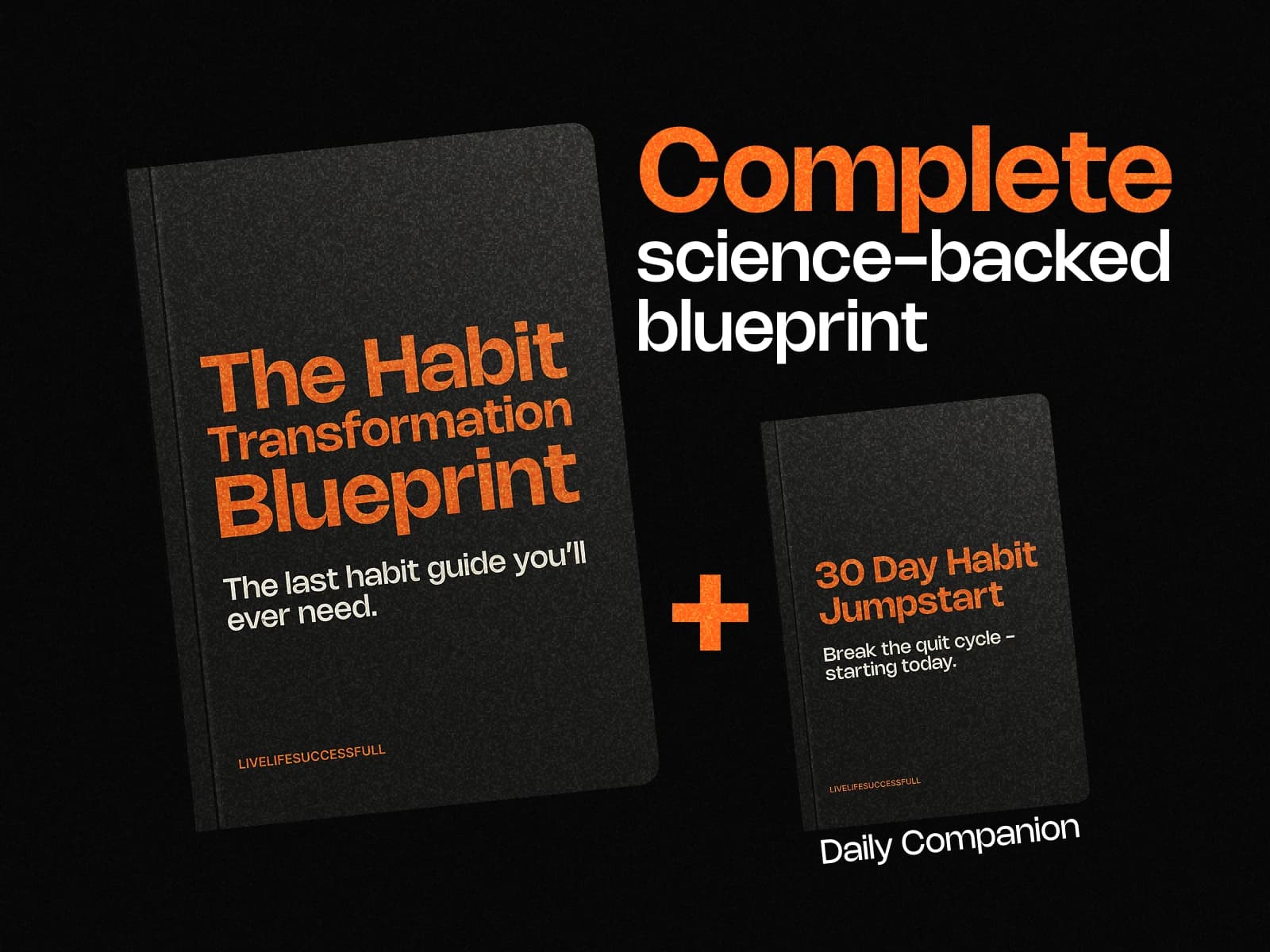
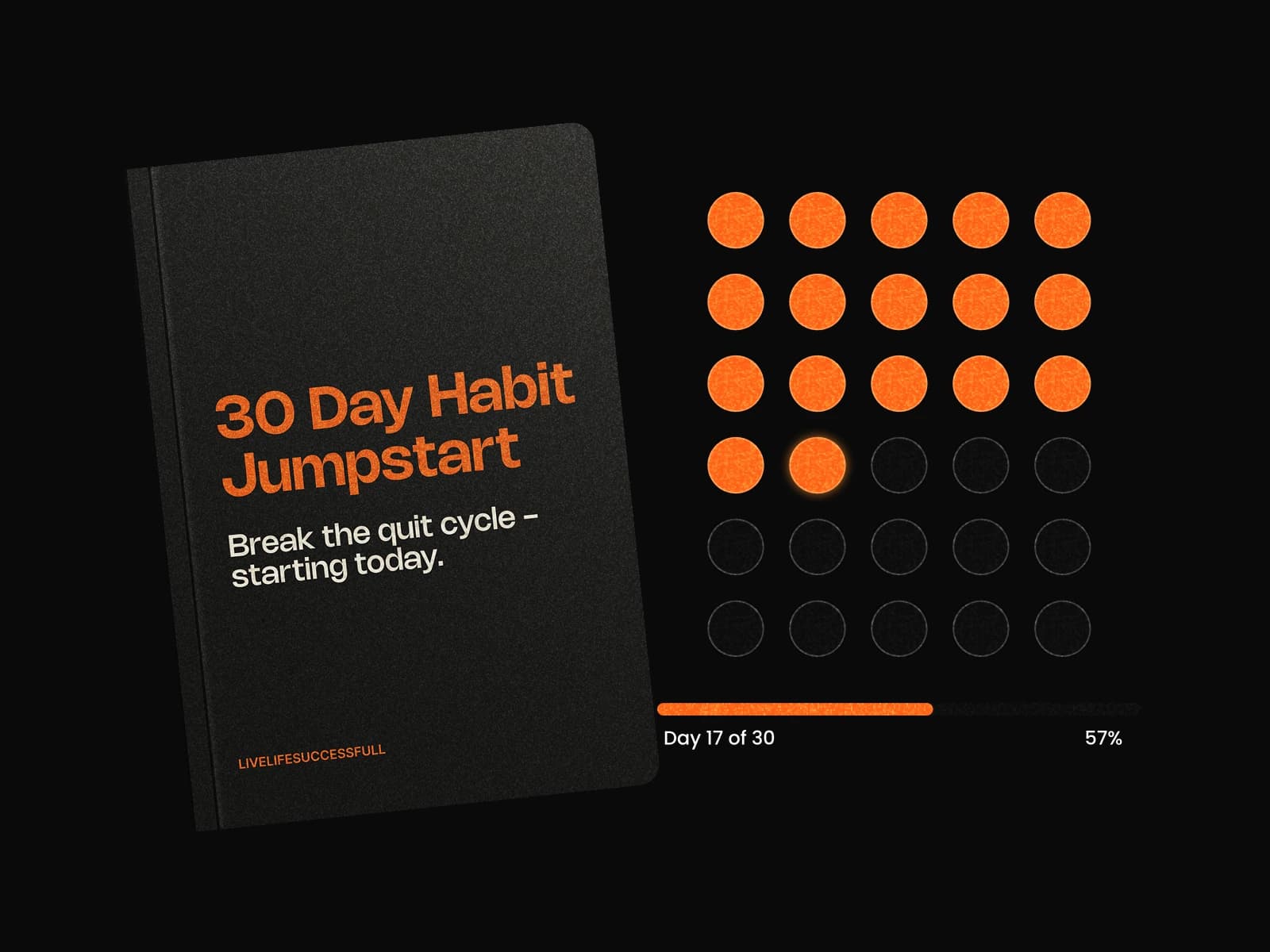
I have built a blueprint that helps you break bad habits and build better, meaningful habits.
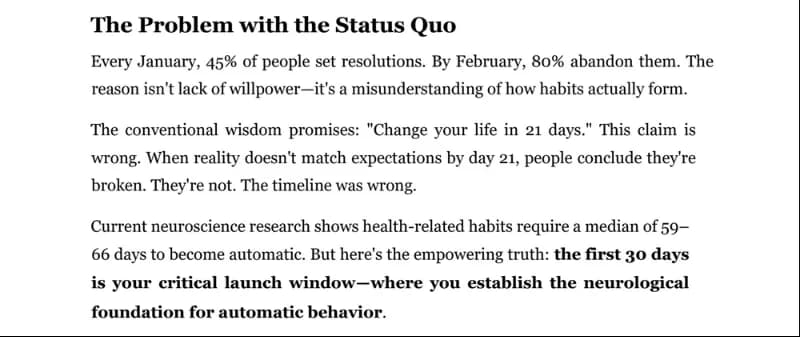
It guides you to design your environment that fits your life structure, so your habits are automatic.
And you don’t fall on your worst days.
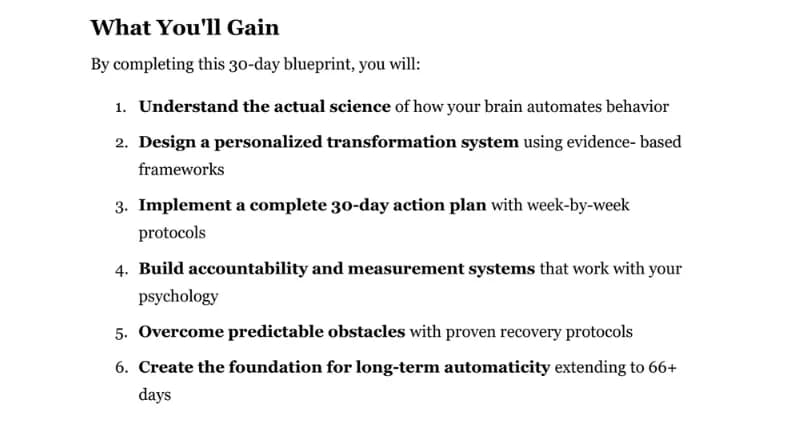
I use this same blueprint to build better and meaningful habits.
Okay, sales pitch over.
Onto the continuation.
The Antidote Architecture
Here’s the counterintuitive part: the fastest way to build dopamine resilience is to intentionally do hard things.
Remember the pleasure-pain balance? When you push the pain side through difficult voluntary activities, your brain naturally upregulates dopamine production to compensate. This is hormesis (beneficial stress that makes systems stronger).
Cold showers. Intense study blocks. Physical exercise. Deep work sessions. Any activity that requires genuine effort and produces delayed gratification teaches your brain to value natural reinforcement over artificial stimulation.
People who successfully break digital addictions, a pattern emerges: they replace easy dopamine with earned dopamine.
They trade scrolling for creating.
Passive consumption for active engagement.
The phone promised connection, they build actual relationships.
The feed promised learning, they read books.
This isn’t about punishment. It’s about architecture. You’re redesigning which neural pathways get reinforced. Do hard things, and your brain learns that accomplishment feels better than notifications.
The identity shift happens automatically: you stop being someone who resists temptation and become someone who architects better rewards.
The practical implementation: add one deliberately difficult activity daily during your reset. It doesn’t matter what. Matters that it’s genuinely challenging and that you choose it consciously. This trains the exact opposite neural pattern from phone use (effort, patience, delayed gratification, and real satisfaction).
The First 72 Hours
The acute phase is brutal. Be ready.
Days one through three, you’ll experience withdrawal symptoms that feel identical to substance withdrawal: irritability, boredom, brain fog, restlessness, and overwhelming urges to check. Your nervous system is recalibrating after prolonged overstimulation.
This is not weakness. This is proof that the system was engineered correctly to make you dependent.
Most people quit here because nobody warned them this was coming. Now you know. The symptoms are temporary. They peak around day two or three, then begin declining. By day seven, they’re substantially reduced. By day fourteen, they’re mostly gone.
Prepare your replacement hobbies now. When the urge hits, you need a tangible alternative. Not another screen. Physical activities. Analog creation. Face-to-face conversation. Reading physical books. Cooking. Building something. Walking.
Anything that engages your hands and doesn’t involve pixels.
Social accountability matters. Tell someone you’re doing this. Check in daily. The 30-day reset is easier with witnesses.
And here’s the lie you need to reject: “balance.”
When fighting deliberately engineered systems, balance is a trap. You cannot have a balanced relationship with a slot machine. You need complete abstinence from the addictive elements, then careful reintroduction of only the tools you genuinely need after your reward system has reset.
Your 30-Day Redesign
The implementation.
Beginner (Days 1-7): Foundation
- Move the phone to a different room overnight. Buy an alarm clock.
- Enable grayscale mode on all devices.
- Delete all non-essential notifications. Your lock screen should stay blank.
- Establish one tech-free meal daily.
Intermediate (Days 8-21): Architecture
- Implement phone foyer protocol. Device stays at the entrance.
- Add 90-minute morning screen ban. First hour of day is yours.
- Delete social media apps. If you need to check, use browser only. This adds friction.
- Introduce one “hard thing” daily. Cold shower, workout, deep work block, or deliberate skill practice.
Advanced (Days 22-30): Systematization
- Full dopamine reset underway. Abstinence from all addictive digital behaviors.
- All tech-free zones established and automatic.
- Hormesis practice embedded. You’re choosing difficulty daily.
- Replacement hobbies active and genuinely engaging.
- Start teaching others your system. Teaching reinforces your own architecture.
By day 30, you’re not the same person. It’s not you have more willpower. But you rebuilt the architecture controlling your behavior.
Your phone isn’t broken. Your environment was. Now it’s not.
The companies that built these systems are counting on you believing this is about self-control. It’s not.
It’s about recognizing that you were algorithmically outgunned, then building better algorithms of your own.
Start today. Not tomorrow. Not Monday. Today.
Move your phone to a different room right now. You’ll feel the difference within hours.
Your attention was never the problem. The architecture controlling it was.
Checkout the blueprint