I wasted 9 years waiting for motivation (here's what actually builds habits)
I wasted 9 years believing the same lie.
Every January, I’d set my resolutions with the same burning motivation. Exercise daily. Read more. Meditate. Build better habits. And every January, I’d watch that motivation carry me through week one, maybe week two if I was lucky, before collapsing into the same familiar pattern of guilt and self-blame.
The worst part? I genuinely thought something was wrong with me. I’d see people maintaining consistent habits and wonder what secret willpower gene I was missing. Spoiler alert: I wasn’t missing anything. I was just building on the wrong foundation.
Here’s what changed everything: Motivation gets you to day 1. But days 2 through 30? You need a completely different engine.
Why You Keep Failing (It’s Not Your Fault)
Let me guess your pattern. You start strong. Day 1, you’re unstoppable. The gym session feels great. The meditation is peaceful. The new morning routine clicks perfectly. You’re convinced this time is different.
Then week two arrives. Suddenly, the alarm feels harder to answer. The workout feels like work instead of excitement. That voice in your head whispers: “Maybe just today I’ll skip it. I deserve a break.”
By day 15, you’re forcing yourself through sheer willpower. By day 21, you’ve either quit or you’re white-knuckling your way through, waiting for it to “become automatic” like everyone promises.
Sound familiar?
Here’s the truth nobody told us: That 21-day promise? It’s based on a complete misunderstanding of science.
In 1960, plastic surgeon Maxwell Maltz noticed his patients took about 21 days to adjust to their new appearance after facial surgery. That single observation—about adjusting to seeing yourself differently in a mirror—somehow mutated into “it takes 21 days to form a habit.” It spread through self-help books, fitness programs, and personal development courses until it became an accepted fact.
The actual science tells a very different story. Researcher Phillippa Lally tracked people building new habits and found the average time to reach automaticity was 66 days, with individual variation spanning from 18 to 254 days depending on habit complexity. Some simple habits can be automated quickly. Complex ones took months.
So when you reached day 21, and the behaviour still required conscious effort, you didn’t fail. The timeline failed you. You concluded something was broken in you, when actually, you were right on schedule—you just didn’t know the real schedule.
How Your Brain Actually Builds Habits
After 9 years of failed attempts, I finally learned how this actually works. And it changed everything.
Your brain isn’t designed to run on motivation. It’s designed to automate. Right now, your brain processes roughly 11 million bits of sensory information every second, but can only consciously handle about 40 to 50 of them. To prevent complete overwhelm, your brain has evolved a brilliant solution: it automates repetitive behaviours, moving them from conscious processing to autopilot.
When you first learn to drive, every action demands focused attention—checking mirrors, adjusting the wheel, managing the pedals. Your prefrontal cortex, the brain’s decision-making centre, is working overtime. But after months of practice, you arrive at destinations barely remembering the drive itself. The behaviour has migrated from your prefrontal cortex to your basal ganglia, your brain’s automatic processing centre.
This migration is what we call habit formation. And MIT researchers discovered it follows a specific pattern: a cue triggers a routine, the routine delivers a reward, and the reward strengthens the entire loop. Every repetition deepens the neural pathway until the behaviour becomes automatic.
But here’s the critical insight I missed for 9 years: This process takes time. Not 21 days. Not even 30 days for most habits.
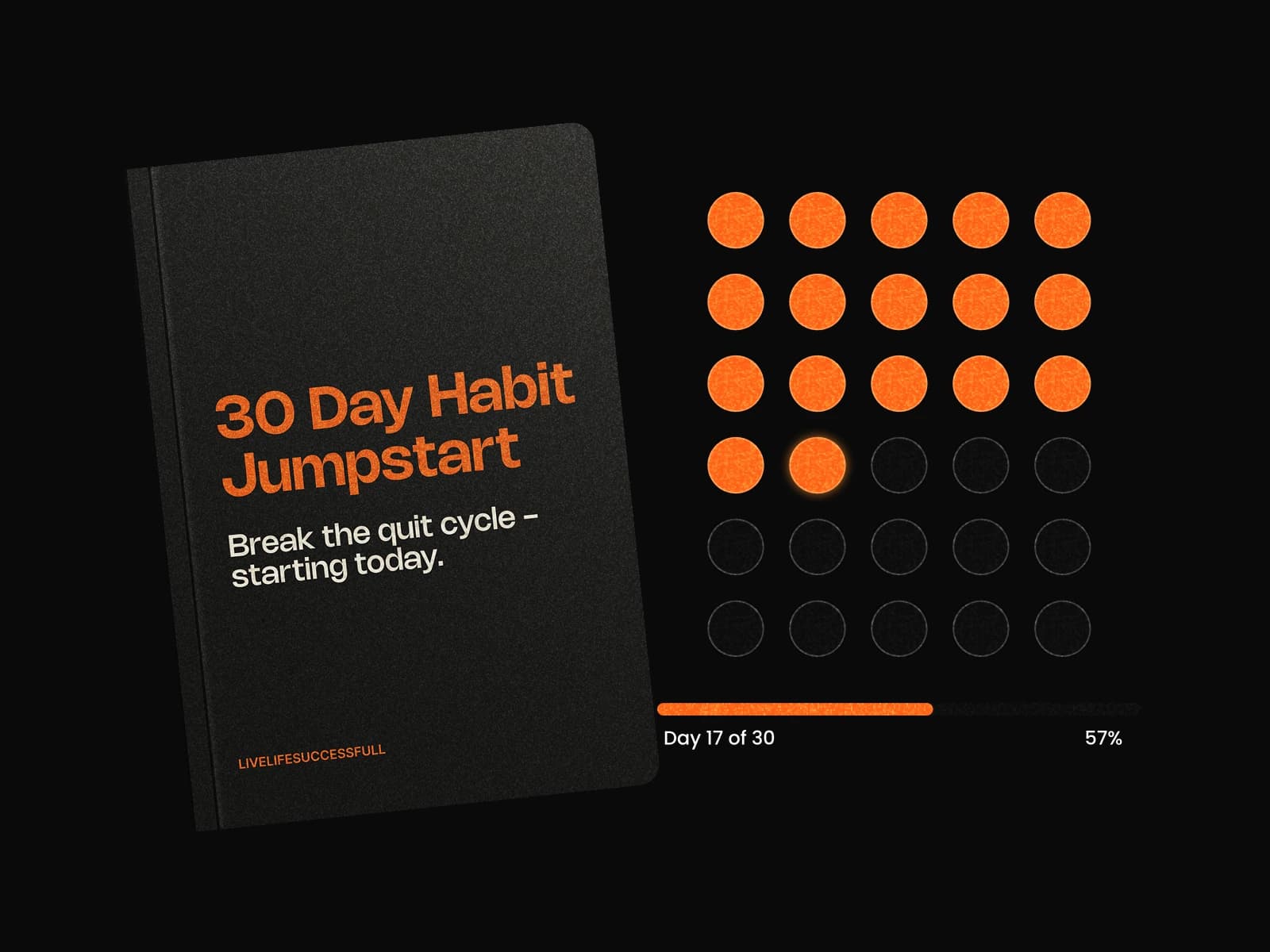
Thirty days is actually your launch window—the phase where you build the neurological foundation that extends to full automaticity around day 66. By day 30, you’ve typically reached about 40% automaticity. The behaviour requires less conscious effort than day 1, but it’s not yet running on autopilot. You’ve proven you can maintain the commitment after novelty fades, which creates psychological momentum that carries you through the next 36 days.
Understanding this timeline completely changed my approach. I stopped expecting habits to feel effortless by day 21. I stopped judging my discipline when day 15 still required willpower. Instead, I built a system designed to work when motivation inevitably died.
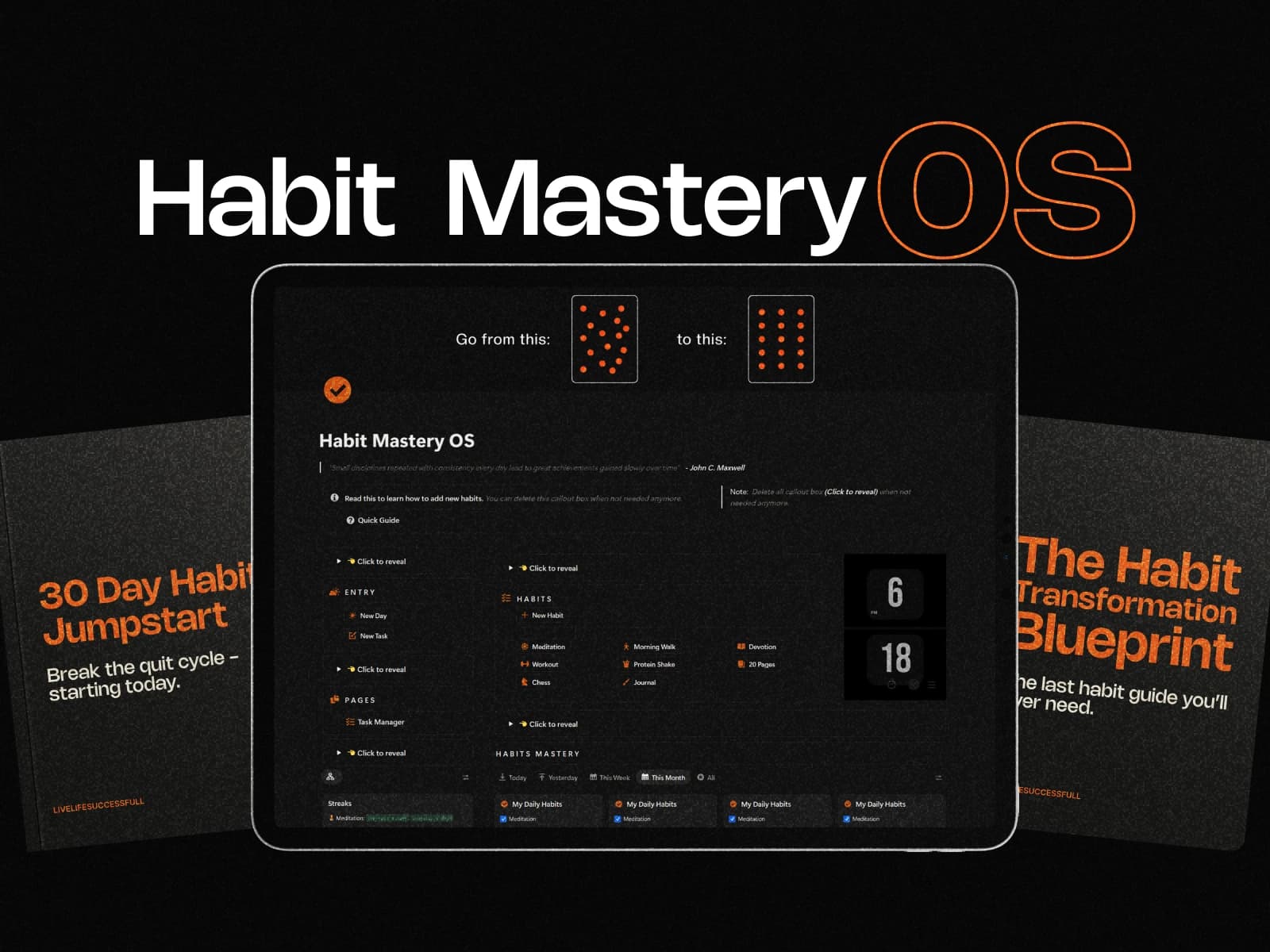
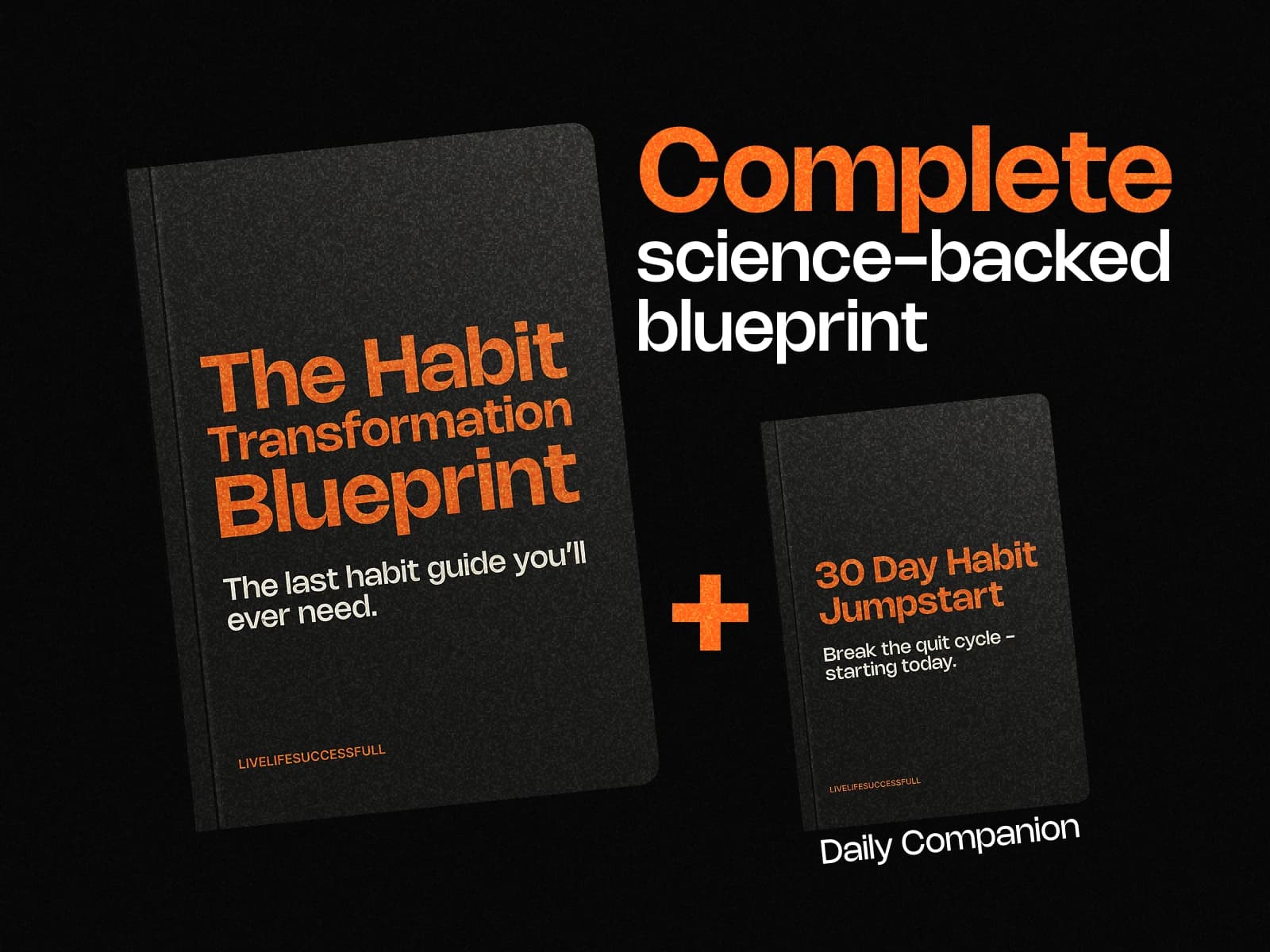
The system below is only a part of the complete system “The 30-Day Habit Transformation Blueprint” that I built and followed (and still following).
You can get the complete system with an additional accountability system here.
The 4-Part System That Changed Everything
After those 9 years of failure, I finally cracked the code. Not because I found more motivation or developed superhuman discipline. I stopped relying on both. Instead, I built architecture.
Part 1: Environmental Cues
The first breakthrough: I stopped trusting myself to “remember.”
For years, I’d rely on mental reminders. “I’ll exercise when I get home from work.” “I’ll meditate after breakfast.” The problem? By the time those moments arrived, my willpower was already depleted by a hundred other decisions.
Instead, I designed my environment to trigger the behaviour automatically. My gym clothes laid out the night before became my morning workout cue. My meditation cushion positioned by my coffee maker triggered my practice. My book on my pillow prompted evening reading.
Research shows our environment shapes behaviour far more powerfully than our intentions. When MIT researchers studied habit formation, they found cues—specific time, location, or preceding action—were critical for automation. Your brain learns to associate the cue with the routine until the cue itself triggers the behaviour automatically.
I stopped asking myself “should I work out?” every morning. The workout clothes were already there. The decision was made.
Part 2: Your Minimum Viable Version
Here’s where I failed for 9 years: I’d set ambitious targets. Forty-five minutes workouts. Thirty pages of reading. Twenty minutes of meditation.
Day 1? Crushed it. Day 15? I’d force myself through. Day 22? I’d skip because I “didn’t have time for the full version.”
The breakthrough: I created minimum viable versions. My real workout plan was 45 minutes. But my minimum viable version—the version I’d do on my worst day—was 10 pushups and a 5-minute walk.
This changed everything. Because doing 10 pushups on a terrible day meant I didn’t break my streak. And maintaining the streak mattered more than the intensity. The neural pathways strengthened through repetition, not perfection.
Part 3: Immediate Rewards
Your brain automates behaviours that are rewarded. Not behaviours that produce results in 8 weeks. Not behaviours that make you a better person someday. Behaviours with immediate dopamine hits.
For years, I exercised “to get fit” or “to lose weight.” Those rewards were months away. My brain didn’t care. Every morning, it compared the immediate reward of staying in bed (comfort, warmth, rest) with the delayed abstract reward of future fitness. Bed won.
The fix: I designed immediate rewards. After every workout, I got 5 minutes of my favourite podcast. After meditation, I enjoyed my coffee guilt-free. After reading, I marked my streak tracker and felt the satisfaction of progress.
These weren’t the “real” rewards I wanted. But they were real enough to my brain’s reward system to strengthen the neural loop connecting cue to routine.
Part 4: Identity Over Outcomes
The final piece: I stopped framing habits as achievements and started framing them as identity.
Old version: “I want to exercise 5 times per week to lose 20 pounds.” New version: “I’m becoming someone who takes care of their body through daily movement.”
The difference is subtle but profound. The first version tied success to an outcome I couldn’t directly control (weight loss depends on dozens of variables). The second version tied success to an action I controlled completely (showing up).
Research shows identity-based framing creates immediate rewards through self-consistency. Every time I exercised, I reinforced my identity as “someone who exercises.” That identity reinforcement became its own reward, independent of fitness results.
The Week-by-Week Reality
Let me give you the honest timeline so you don’t quit when it gets hard.
Week 1 felt easy. Novelty carried me. Motivation was high. I executed perfectly. This is the trap—week 1 makes you think it’ll stay this easy.
Week 2 was where I always quit before. Motivation crashed hard. The behavior started feeling like work instead of excitement. The critical shift: I didn’t rely on motivation anymore. I relied on my environmental cues, my minimum viable versions, and my immediate rewards. I showed up even when I didn’t feel like it because the system made showing up the path of least resistance.
Week 3 felt like a plateau. Progress stalled. The habit didn’t feel dramatically easier. This is when identity integration became critical. I repeated to myself: “I’m someone who does this. This is who I’m becoming.” Not “I should do this because it’s good for me.” Identity, not obligation.
Week 4 was when I finally noticed the shift. The habit required noticeably less willpower than week 1. The behaviour was integrating into my daily rhythm. I started planning for days 31-66 instead of wondering if I’d make it to day 30.
The most important rule I discovered: Never miss twice. Missing one day happens. Life is chaotic. But missing two days in a row creates a death spiral. If I skipped day 15, day 16 was absolutely non-negotiable. This single rule prevented casual misses from becoming permanent quits.
Your 3-Step Starting Protocol
Stop reading and start building. Not next Monday. Not “when things settle down.” Today.
Step 1: Pick ONE Habit for Tomorrow Morning
Not five habits. Not a complete lifestyle overhaul. One simple behaviour you can do tomorrow. Make it simple enough that your worst-day version is still achievable.
My first successful habit wasn’t a 45-minute workout. It was 10 pushups after pouring my morning coffee. That’s it. Build momentum before building complexity.
Step 2: Design Your Cues Tonight
Before you sleep tonight, position your environmental trigger. If it’s exercise, lay out your workout clothes. If it’s reading, put your book on your pillow. If it’s meditation, set up your cushion where you’ll see it.
The cue does your remembering for you. Your willpower doesn’t have to.
Step 3: Choose Your Immediate Reward
What feels good within 60 seconds of completing your habit? A specific song? Five minutes of a podcast? A particular snack? A visible mark on your streak tracker?
Make it specific. Make it consistent. Make it immediate.
The Truth About Those 9 Years
Looking back, I didn’t waste 9 years. I learned exactly what doesn’t work: motivation-based habit building, unrealistic timelines, outcome-focused thinking, and willpower dependence.
What works is simpler and harder. Simpler because it’s just a system—cues, routines, rewards, identity. Harder because it requires showing up on day 15 when motivation is dead, and your brain is screaming to quit.
But here’s what those 9 years taught me: The days when you don’t feel like it are the only days that matter. Anyone can show up when they’re motivated. The system proves itself when motivation fails.
Thirty days is your launch window. Days 31 through 66 is where the behavior becomes genuinely automatic. But none of that happens if you don’t start.
Tomorrow morning, when you don’t feel like it—that’s when your system proves itself. That’s when you stop being someone who relies on motivation and start being someone who has a system.
Your turn. Build it.
P.S. Day 30 won’t feel like you expect. You won’t wake up magically transformed. The habit won’t feel completely effortless. You’ll still need to show up deliberately. But here’s what will be different: you’ll have 30 days of proof that you’re someone who keeps their commitments even when it’s hard. That proof, that identity shift is worth more than any motivation spike. It’s what carries you to day 66 and beyond. The version of you on day 31 doesn’t need motivation anymore. They have evidence.