From Chaos to Control: 5 Habits That Change Everything
I’ve failed at building habits more times than I can count.
The worst part wasn’t the failure. It was the pattern.
I’d start with fire: wake up at 5 AM, meditate, journal, work out, eat clean, and read before bed. For three days, I was unstoppable. By day seven, cracks appeared. By day fourteen, I’d negotiated myself down to “just the essentials.” By day twenty-one, I was back where I started, scrolling Instagram at midnight, promising myself I’d start again on Monday.
The shame wasn’t in failing once. It was in failing the same way, repeatedly, while watching other people seem to effortlessly maintain the exact habits I couldn’t stick to for three weeks.
I thought I was broken.
Turns out, I was just building habits backwards.
You’ve Been Lied To About How Habits Work
Here’s what you’ve been told: you need more discipline, more motivation, more willpower. You need to want it badly enough. You need to push through the hard days. You need to be consistent.
All of this is technically true. And all of it is useless.
What no one tells you is: your brain doesn’t care about your motivation (not even a little bit).
Research on gratitude practices shows something fascinating. When people practice gratitude regularly, their brains create new neural pathways in the prefrontal cortex (the area responsible for decision-making and emotional regulation). The medial prefrontal cortex shows lasting structural changes that persist months after the practice begins. Your brain physically rewires itself.
But here’s the thing: the people whose brains changed weren’t the ones with the most motivation. They were the ones who understood a simple truth: you don’t build habits by chasing outcomes. You build habits by becoming someone who does the thing.
Most people approach gratitude thinking, “I want to feel less anxious” or “I want to be happier.” That’s outcome-based thinking. It fails because the reward is distant and abstract. Your brain’s reward system doesn’t activate for future, hypothetical outcomes.
The people who succeed think differently: “I am someone who notices what’s going right.” That’s identity-based thinking. The reward is immediate - you’re reinforcing who you are right now, not chasing who you might become later.
This isn’t motivational fluff. This is how your brain actually automates behaviour. And once you understand this principle, you can build any habit without depleting your willpower reserve every single day.
Let me show you five specific habits that transform different parts of your life and how they work at the neurological level.
Habit 1: Daily Winning Streak (Building Delusional Optimism)
Every night before bed, write down one win from your day. One sentence. Could be as small as “I made my bed” or as significant as “I closed the deal.”
This feels stupid when you start. You’ll think, “This can’t possibly matter.”
But here’s what’s happening in your brain: gratitude and win-tracking activate your hypothalamus and downregulate threat responses from your amygdala. Your amygdala is constantly scanning for danger, problems, threats. It’s the part of your brain that keeps you up at 2 am replaying that embarrassing thing you said six years ago.
When you deliberately notice wins - even tiny ones - you’re training your brain to recognize what’s going right instead of obsessing over what’s going wrong.
Neuroscientists describe this as strengthening neural pathways. The more you activate these “gratitude circuits,” the stronger they become. Your brain literally starts defaulting to noticing the positive.
The problem most people face isn’t that their life is terrible. It’s that their brain has been trained to filter for threats and problems.
You scroll social media and see everyone winning while you’re stuck. You compare yourself to people three steps ahead. You catastrophize small setbacks into evidence that you’re failing.
This habit rewires that pattern.
But only if you approach it correctly.
Don’t write “I want to feel more optimistic.” That’s outcome-based. Instead, think: “I am someone who notices wins daily.” That’s identity-based. The difference is everything.
How to build it: Anchor it to an existing routine you already do automatically. For most people, that’s brushing your teeth before bed. After you brush your teeth, immediately write one win. Same time, same place, every night. The existing habit becomes the cue for the new one. (This is called habit stacking—it increases success rates by 64%, but we’ll come back to that.)
Habit 2: Deep Journaling (Your Clarity Engine)
This isn’t “dear diary” journaling. This is using writing to interpret your life when you can’t think straight.
You know those moments when you’re overwhelmed, confused, paralyzed by a decision you need to make? When your mind is a swirling mess of conflicting thoughts and you literally don’t know what you want?
That’s when you journal.
Research shows that expressive writing activates your brain’s reticular activating system (a network that filters and prioritizes information).
When you write, you force your brain to organize scattered thoughts into coherent sentences. This physical act of organizing language actually organizes your thinking.
Studies on decision-making demonstrate that writing about complex emotions and situations helps people reframe negative experiences and gain new perspectives. Journaling reduces rumination (that exhausting loop of repetitive negative thoughts) by converting internal chaos into external structure.
Here’s what happens practically: you sit down feeling like you have seventeen problems and no solutions. You write for ten minutes. You get up with two actual problems and three possible solutions.
The problems didn’t change. Your ability to see them clearly did.
Most people avoid journaling because they think “I’m not good at writing” or “I don’t know what to say.” That’s the point. You’re not trying to be good. You’re trying to think clearly. The messier your thoughts, the more you need to journal.
The identity shift: from “I don’t know what I want” to “I’m someone who gains clarity through reflection.”
How to build it: Keep a notebook next to your coffee maker. After you pour your coffee, sit and write for five minutes before you do anything else.
Don’t write about what you should be grateful for. Write about what’s actually confusing you right now. Ask yourself hard questions on paper. The answers will surprise you.
Habit 3: Quit Porn (Confronting What You’re Ashamed Of)
Let’s talk about the habit no one wants to admit they need.
I spent years in a cycle: watch porn, feel terrible, promise myself I’d stop, make it three days, relapse, feel worse, promise harder, repeat. The shame was suffocating.
I thought I was morally broken, weak, and undisciplined.
Then I learned the neuroscience.
Pornography consumption triggers your brain’s reward system identically to cocaine.
Your brain floods with dopamine (the same neurotransmitter released by drugs and alcohol). With repeated exposure, your brain adapts through desensitization. Natural rewards become less satisfying. You need more frequent or more intense stimulation to get the same response.
Brain scans comparing cocaine-addicted brains to pornography-addicted brains show the same patterns. This isn’t metaphorical. Your brain has been physically changed.
Understanding this was the first step to freedom for me. Because suddenly the problem stopped being “I’m a bad person” and started being “my brain chemistry has been hijacked by high-dopamine stimulation.”
Research on pornography recovery shows that guilt, shame, and regret are the most commonly experienced emotions by people struggling with this. And shame is the exact mechanism that keeps you stuck. Shame says “I’m broken.” Shame says “no one else struggles like this.” Shame says “don’t tell anyone.”
But neuroscience says something different: your brain learned a pattern. And brains can learn new patterns.
Recovery isn’t about willpower. It’s about understanding that this is a treatable neurological condition, not a moral failure.
When people with pornography addiction understand the brain science, shame loses its power. You can name the problem. You can socialize it with trusted people. You can notice the urges without acting on them.
The identity shift: from “I’m broken and shameful” to “I’m someone recovering my brain chemistry.”
How to build it: Label the problem without judgment. Track every urge you resist (not to shame yourself, but to build awareness). When an urge hits, use a pattern interrupt: 20 push-ups, a cold shower, calling a friend. The goal isn’t to white-knuckle through it. The goal is to build competing neural pathways.
Habit 4: Digital Detox (Reclaiming Your Attention)
Your attention span has been stolen.
Not metaphorically. Literally. Research shows that attention span in young adults has declined by approximately 12% over the past two decades. The average person can maintain intense focus for about 20-30 minutes before their brain requires a reset.
But most people can’t even maintain focus for 20 seconds before reaching for their phone.
Digital platforms are designed to maximize your time online. App developers use notifications, gamification, and algorithms specifically engineered to keep you scrolling.
These aren’t accidents.
These are intentional psychological interventions designed to create what researchers call “slot-machine feedback loops”, compulsive checking where you feel an uncontrollable urge to stay connected.
The cost is catastrophic.
Digital distractions interfere with academic performance, displace learning, contribute to cognitive fatigue, and create what neuroscientists now call “brain rot” (the deterioration of attention and critical thinking from constant digital stimulation).
You know this. You feel it. You pick up your phone to check one thing and look up 47 minutes later, having accomplished nothing, feeling worse than before.
The solution isn’t deleting all social media and moving to a cabin. The solution is intentional subtraction.
Every week, cut one digital distraction. Turn off one notification. Unfollow one negative influence. Remove one autoplay feature. You’re not trying to achieve digital purity. You’re trying to reclaim your attention one small decision at a time.
The identity shift: from “I’m addicted to my phone” to “I’m someone who protects my attention.”
How to build it: Sunday evening, identify one specific digital friction point. Not “I’ll use social media less.” That’s vague.
Instead: “I’m removing Instagram from my home screen” or “I’m turning off all news notifications” or “I’m unfollowing accounts that make me feel inadequate.” One decision. Every week. In twelve weeks, you’ve made twelve surgical cuts to your digital environment.
Habit 5: Pomodoro Deep Work (Training Concentration)
You can’t focus because you’ve never trained yourself to focus.
The Pomodoro Technique works like this: 25 minutes of focused work, 5 minutes of rest, repeat. After four cycles, take a longer 15-30 minute break.
This feels absurdly simple. That’s the point.
Research on cognitive performance shows that the human brain operates on ultradian rhythms (biological cycles where focus peaks for limited periods before requiring recovery).
The Pomodoro structure aligns perfectly with these natural rhythms. Your brain can maintain intense concentration for about 20-30 minutes. After that, performance degrades.
By enforcing regular breaks before you feel tired, you prevent cognitive burnout. Studies demonstrate that brief diversions during prolonged tasks dramatically improve focus. The brain is designed to respond to change. Sticking to a single task for too long actually hampers your performance.
But there’s something deeper happening: when you work in 25-minute bursts, you’re not “writing a thesis.” You’re just “spending 25 minutes writing.” This compartmentalization lowers the barrier to entry. It reduces the anxiety associated with starting complex tasks.
Research confirms this works: people using the Pomodoro Technique show 40-60% productivity boosts compared to traditional work approaches. Your brain also becomes more motivated when rewards are closer. In this technique, the reward (the break) is never more than 25 minutes away.
The identity shift: from “I can’t focus on anything” to “I’m someone who works in focused bursts.”
How to build it: Pick your hardest task tomorrow. Set a timer for 25 minutes. Work on only that task until the timer rings. When it rings, stand up, walk around, get water. Five minutes. Then start another 25-minute session.
Don’t aim for hours of focus. Aim for one clean 25-minute session. That’s the habit.
The System That Makes These Stick (Without Willpower)
Here’s the truth I wish someone had told me years ago:
These five habits work not because they’re special, but because they exploit how your brain actually automates behaviour.
Every habit forms through a three-part loop: a cue (trigger), a routine (behaviour), and a reward (neurological benefit). Your brain learns to predict rewards based on cues. When the prediction is strong enough, the behaviour becomes automatic. You stop deciding. You just do.
Most people fail because they focus only on the routine. They say “I’m going to journal every day”, without designing the cue that triggers it or the reward that reinforces it.
That’s like trying to build a table with only one leg. It collapses.
The five habits I showed you work because they use existing behaviours as cues (brushing teeth triggers win-tracking, pouring coffee triggers journaling, Sunday evening triggers digital detox).
They create identity-based rewards (you’re becoming someone different, not just doing something different). And they reduce the friction of starting.
This is called habit stacking (linking a new habit to an established one). Research shows it increases success rates by 64% compared to trying to build standalone habits. But that’s just one piece of a complete system.
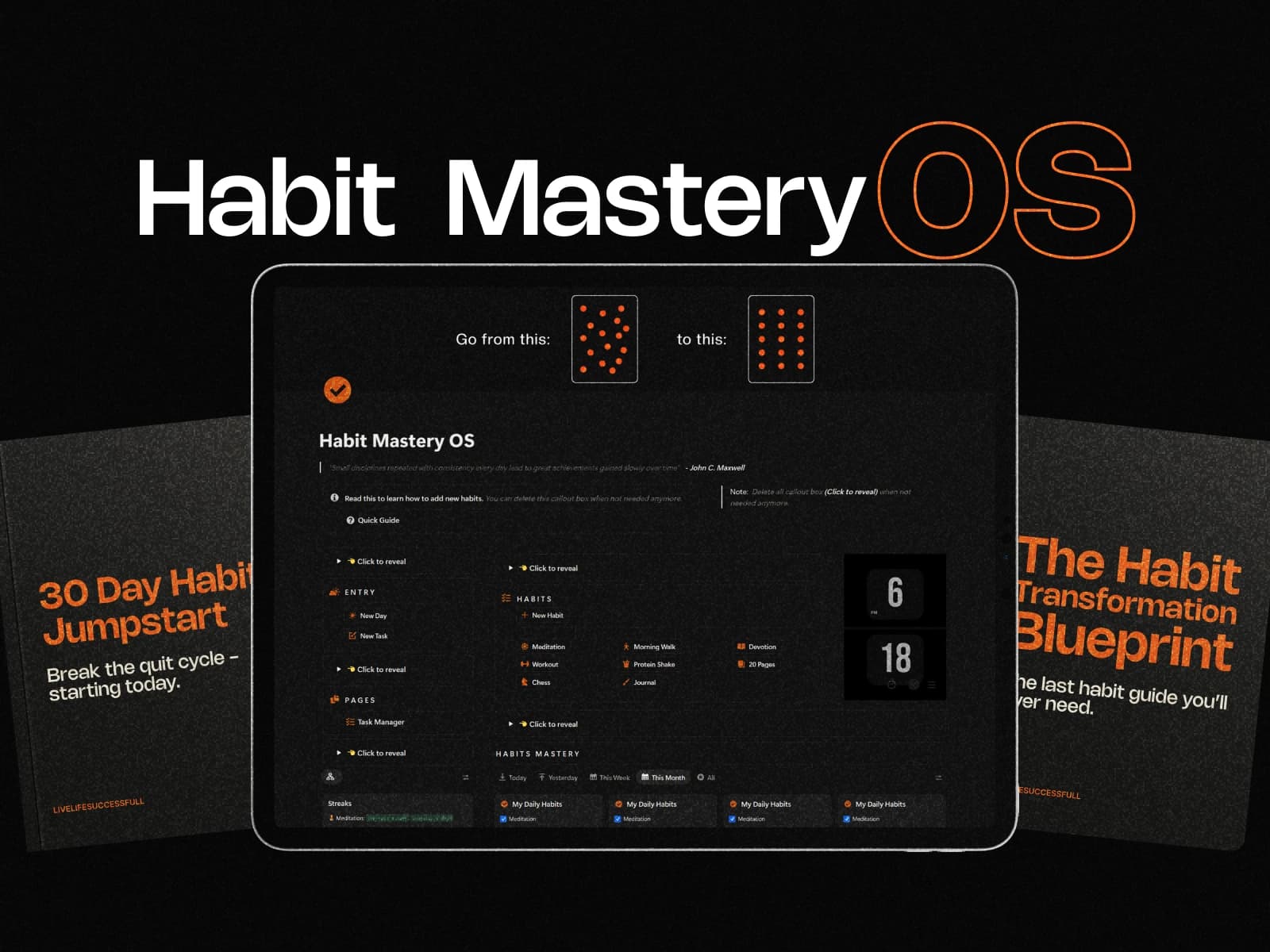
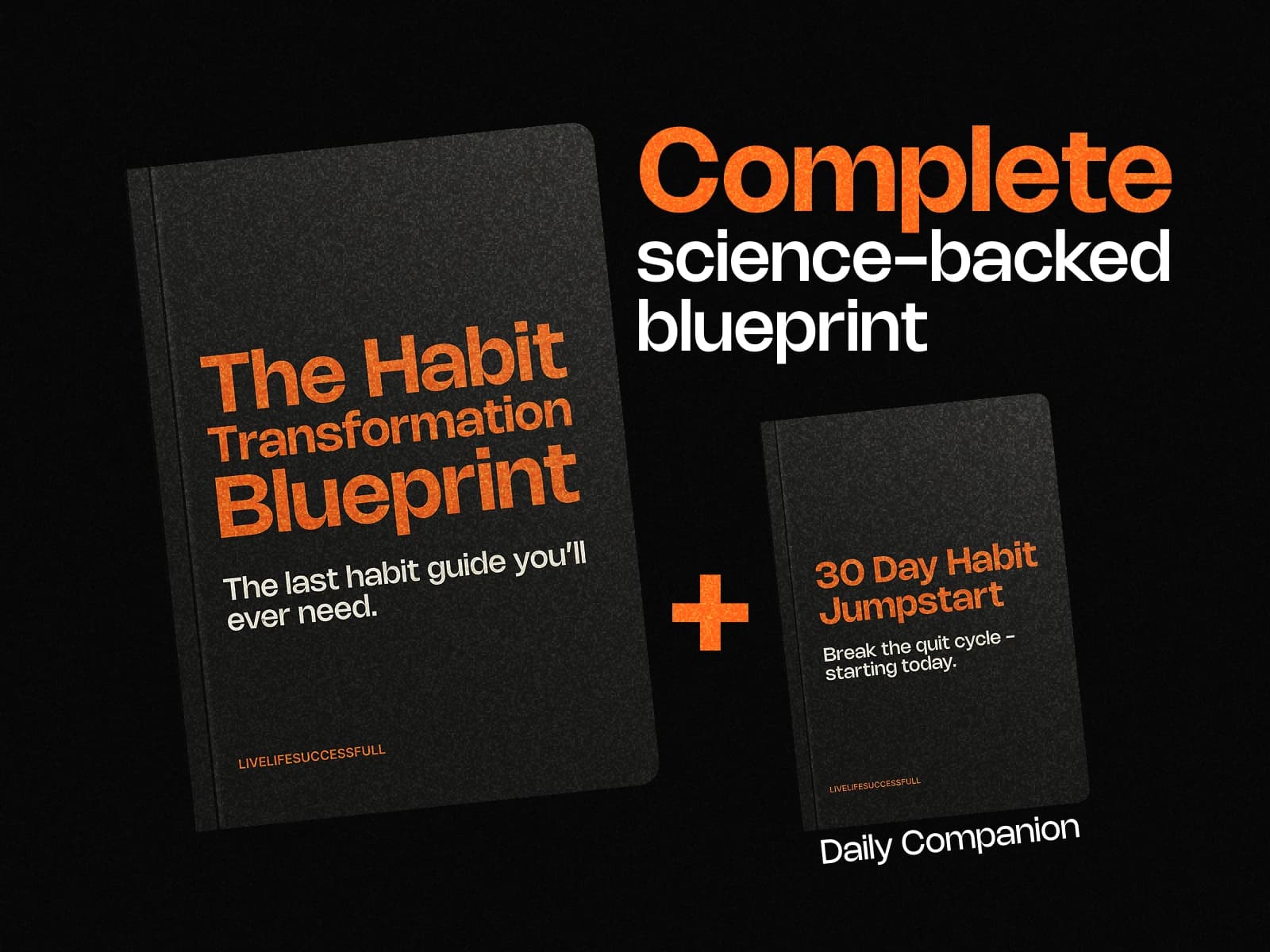
There’s more: environmental design, reward architecture, the neuroscience of automaticity, the 30-day launch window where most habits fail or stick, the recovery protocols when you miss a day. The complete architecture exists (The Habit Transformation Blueprint breaks down every component—the cues, the rewards, the week-by-week implementation, the obstacle prevention strategies.)
But you don’t need the complete system to start. You just need to understand the central principle:
Stop trying to build habits through motivation. Start building them through identity and environmental design.
You’re not someone who needs to be more disciplined. You’re someone who’s been using a broken system. The habits don’t fail. The approach fails.
Who You’re Becoming
These five habits target five different transformation domains:
- Daily winning streak: Building delusional optimism
- Journaling: Decision-making and self-awareness
- Porn recovery: Self-control and shame dissolution
- Digital detox: Attention protection and focus
- Pomodoro: Productivity and deep work capacity
But the deeper transformation is singular: you’re moving from someone who tries everything and finishes nothing to someone who intentionally designs their behaviour.
You’re becoming an architect instead of a victim.
You don’t need motivation to brush your teeth. You don’t need willpower to make coffee. You don’t need discipline to check your phone (unfortunately). Those behaviours are automatic.
These five habits can become just as automatic. Not through motivation. Through identity-based design and environmental systems.
Start with one. Pick the habit that solves your most urgent problem right now. Not the one that sounds most impressive. The one you actually need.
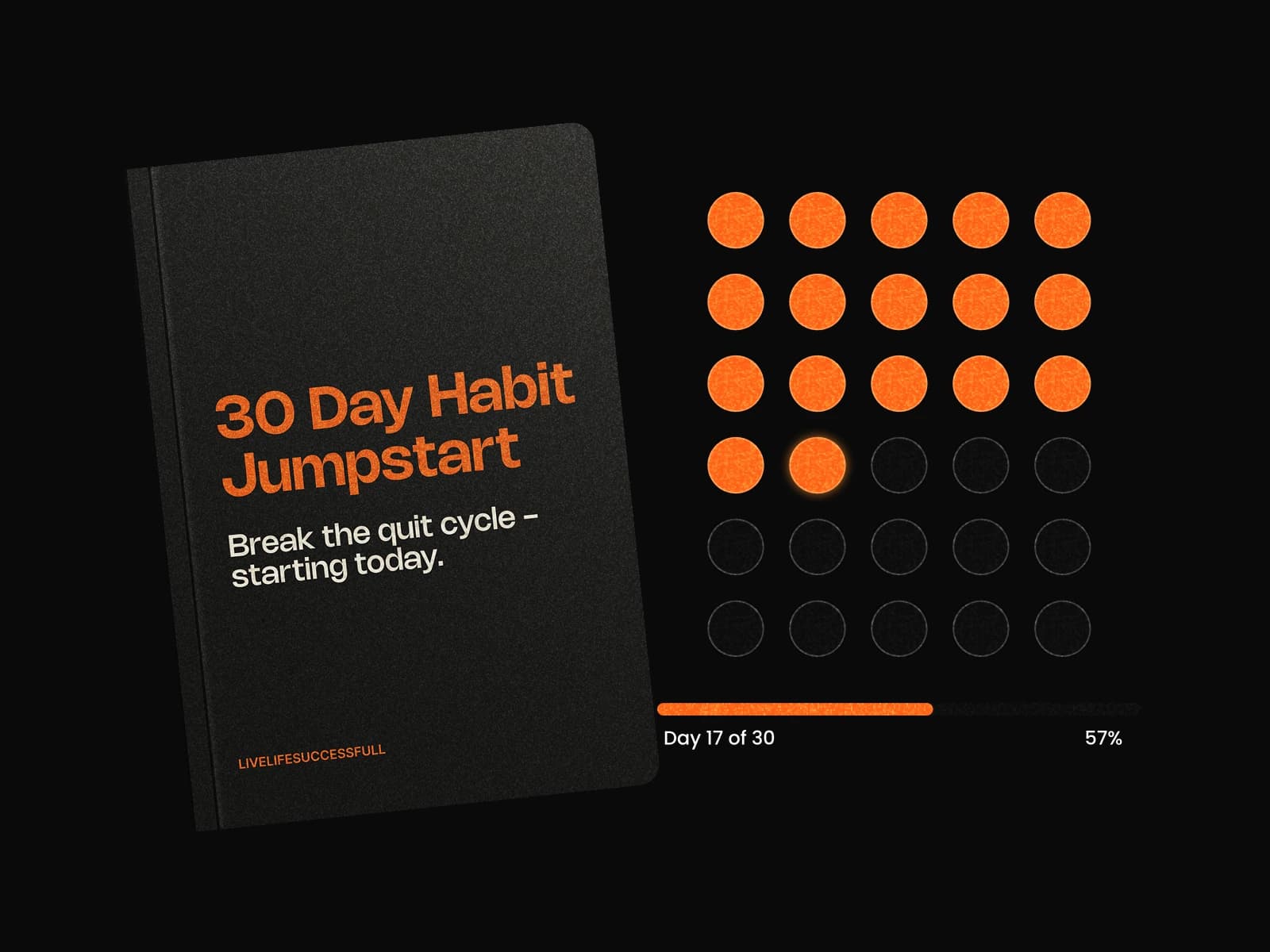
Build it for 30 days using the principles I showed you: anchor it to an existing routine, focus on identity and not outcomes, track it simply.
Then add the next one.
These five habits transform lives. But only if they stick. And they only stick when you understand that habits aren’t built through willpower—they’re built through architecture.
Your brain is waiting to automate the right behaviours. You just have to show which ones matter.