Why bad habits form Easily (but good ones don’t)
There’s a specific kind of shame that comes after quitting a good habit.
It’s not loud. It doesn’t announce itself. It settles in quietly, usually around day 12 or 14. When you realize you’ve stopped going to the gym, or the book is sitting untouched on your nightstand, or the meditation app hasn’t been opened in a week.
And the story that follows is always the same: I knew I couldn’t do it. I never follow through. This is just who I am.
I want to stop you right there.
Not that the story is harsh. But it’s wrong, and it’s been wrong every time you’ve told it to yourself.
Here’s what’s actually happening: you’ve been playing a game that was rigged against you before you made your first move. The bad habits you’re trying to break were structurally engineered to stick without effort. The good habits you’re trying to build were structurally engineered for nothing (no support, no reinforcement, no invisible hand pushing you forward).
You haven’t been failing because of who you are, but how the game is designed.
This newsletter is about those design forces. Three of them, specifically. And once you understand them, you’ll stop blaming yourself and start doing something far more effective: changing the design.
Why Your Brain Isn’t the Problem (Even When It Feels Like It Is)
Most habit advice starts in the wrong place. It tells you to try harder, want it more, build your discipline. It treats the problem as a personal failure of character.
But consider what behavioral neuroscience actually shows: the tendency to repeat behaviors based on their immediate consequences is not a weakness. It’s a feature. One that predates us by millions of years and runs in every mammal that’s ever existed.
Your brain isn’t broken when it keeps pulling you toward bad habits. It’s doing exactly what it was designed to do. The question isn’t whether you can override your biology. The question is whether you understand it well enough to work with it.
Three structural forces explain the asymmetry between bad habits and good ones. None of them has anything to do with your discipline, your willpower, or your character.
Framework 1: The Reward Asymmetry
Bad habits don’t stick because they’re easy, but they pay immediately.
Pick any bad habit and trace the timeline. You open Instagram, and within seconds, you get a hit of novelty and social connection. You eat the junk food, and within minutes you get taste pleasure and a brief emotional lift. You hit snooze, and within seconds, you get warmth and the absence of discomfort. The reward lands now, not tomorrow, not next month.
Now trace the good habit. You go for a run, and the fitness results arrive in four to eight weeks. You read the book, and the expanded perspective builds over months. You meditate, and the measurable stress reduction comes with weeks of consistent practice. The reward is real, often far larger than the bad habit’s reward. But your brain doesn’t process it with the same urgency, because your brain operates on what behavioral scientists call temporal discounting.
Temporal discounting is the brain’s tendency to devalue rewards that arrive later. Research published in Frontiers in Behavioral Neuroscience confirms this isn’t irrationality. It’s a fundamental feature of how reward systems work. The further away a reward is, the less neurological weight it carries in the present moment. Your brain, making a choice right now, isn’t weighing “phone scrolling” against “becoming healthier.” It’s weighing “dopamine in three seconds” against “dopamine in six weeks.” Put that way, it’s not surprising which one wins.
This is why the standard advice, just think about your long-term goals, produces such limited results. Thinking about the future doesn’t override the biology of the present. The bad habit has a structural timing advantage that abstract thinking alone can’t close.
But the asymmetry is structural, not permanent. If you understand it, you can address it.
Framework 2: The Friction Gap
The reward asymmetry explains why bad habits are reinforced faster. The friction gap explains why they require so little effort to start in the first place.
Friction is anything that stands between a decision and a behavior. And the default friction levels for bad habits versus good habits are not close.
Right now, wherever you’re reading this, your phone is within arm’s reach. Social media is two taps away. The snooze button will be exactly where your thumb lands tomorrow morning. The junk food is already in the kitchen, already open, already visible. Every bad habit you’re struggling with has been positioned by the products designed around it, by the environment you’ve built over the years, at near-zero friction. The behavior happens before you’ve made a conscious decision.
Now think about what it takes to start a workout. You have to decide to go. Find your gym clothes. Maybe pack a bag. Travel to a location. Make more decisions once you’re there. The friction isn’t impossible, but it’s structurally far higher than the alternative sitting on your nightstand.
Here’s a number that makes this concrete: a survey by the American Academy of Sleep Medicine found that 87% of people sleep with their phone in their bedroom. That single environmental fact means that for most people, phone scrolling begins before they’ve gotten out of bed. The bad habit is already positioned to win before the day starts, not because of weak character, but because of where the object is placed.
This matters because willpower was never designed to fight structural design. Research consistently shows that people vastly overestimate how much discipline they have and vastly underestimate how much their environment controls their behavior. You fail at day twelve because your willpower was fighting a friction gap it was never equipped to close alone.
The bad habit had zero resistance. The good habit had barriers at every step. Every day you pushed through anyway, you were working against a structural disadvantage. Not a personal one.
Framework 3: Environment as the Real Architect
If the reward asymmetry and the friction gap are structural problems, they need structural solutions. And the most powerful structural lever available to you isn’t motivation, discipline, or a better mindset.
It’s your environment.
Strategic environmental redesign increases habit adherence by 58%. That’s not a marginal improvement. That’s the difference between a habit that collapses by week two and one that compounds into month three.
The clearest demonstration of this comes from a simple experiment in a university cafeteria. Researchers moved fresh fruit from its usual spot to the center of the serving area, the most visible, most accessible position. They changed nothing else. No health campaign, no pricing incentive, no posted reminders. Just the position of the food. Fruit became the most selected dessert item. No one’s intentions changed. No one tried harder. The terrain changed, and behavior followed.
This is the principle most habit advice skips: you are not fully separate from your environment. You are, to a significant degree, produced by it. The objects you can see, the number of steps required to access a behavior, and the cues that greet you when you walk into a room. These shape choices before your conscious mind has weighed in.
Research on self-control reveals something counterintuitive: people who appear to have strong discipline aren’t necessarily fighting their impulses harder than everyone else. They’ve built environments where the conflict rarely arises, where the healthy behavior is the path of least resistance, and the temptation requires actual effort to reach.
That’s not a personality trait but a design decision.
Which means the most effective thing you can do isn’t to want the good habit more. It’s to redesign the terrain so the good habit runs downhill.
To close the Reward Asymmetry: Attach an immediate reward to the good habit, something that happens right after the behavior ends. The workout finishes, and you listen to the one podcast you only allow yourself during exercise. The reading is done, and you mark off the day with visible, satisfying evidence. You’re not waiting for your brain to eventually appreciate the long-term benefits. You’re giving it something to respond to now, until the habit matures enough to become its own reward.
To close the Friction Gap: Redistribute friction deliberately. Add it to bad habits, phone charged in another room, junk food removed from the kitchen, social media apps logged out so re-entry requires effort. Remove it from good habits, workout clothes set out the night before, book placed on the pillow, water glass already filled and waiting. Neither move requires willpower. Both change the structural default.
The terrain shifts. Gravity starts working for you.
Three Moves to Flip the Terrain Today
Each one is a single change you can make in the next 24 hours.
Move 1: Find the friction advantage of one bad habit
Pick one bad habit that keeps winning.
Ask: What makes this frictionless? Where is it positioned? What makes it the easiest available option in that moment?
Once you see it, add friction deliberately. Move the phone to another room. Remove the food from the kitchen. Log out of the app so re-entering takes effort. You don’t need to eliminate access. You just need to interrupt the zero-effort path. Two extra steps are often enough to break the automatic trigger.
Move 2: Find the friction disadvantage of one good habit
Pick the good habit you keep failing to start.
Ask: Where does the resistance begin? What’s the first decision you have to make the first step that requires effort before the behavior even begins?
Eliminate that step in advance. Set out your workout clothes tonight. Open the book to the right page before you go to sleep. Set up your space so there’s nothing to arrange in the morning. Make starting as close to automatic as the bad habit already is.
Move 3: Attach one immediate reward
Pick a good habit that’s producing no immediate satisfaction. Design one specific reward that follows within minutes of completing it. Something you genuinely look forward to, not a vague sense of virtue.
You’re directly addressing the reward asymmetry and not waiting for your brain to register the delayed benefits. Giving it a signal it can act on now, until the habit builds enough momentum to sustain itself.
These three moves won’t solve everything. But they address the structural roots and structural changes compound in ways that pure effort never does.
The Identity That Comes After
There’s a shift that happens when you stop framing this as a discipline problem.
When the story is “I’m someone who can’t follow through,” every failed habit is more evidence. The data compounds against you, and so does the shame.
When the story is “I’m someone who understands why these systems work against me, and I know how to redesign them,” a failed habit becomes information. What friction was still in place? What reward wasn’t immediate enough? What environmental cue was still pulling toward the old pattern?
That’s a different kind of person. Not someone who forces themselves through willpower, but someone who engineers conditions for the right outcome. Someone who looks at their environment the way an architect looks at a building. Something deliberately designed, and therefore changeable.
You don’t become that person by trying harder. You become that person by changing the terrain, one structural move at a time.
The game was rigged. Now you know how it works.
What’s next?
Build better habits and win your first 30 days without relying on motivation:
-
- Build the 3-step habit-building system that fits your life.
- No daily overwhelm of “what should I do today?”, week-by-week 30-day action plan.
- Identity framing framework for lasting change.
-
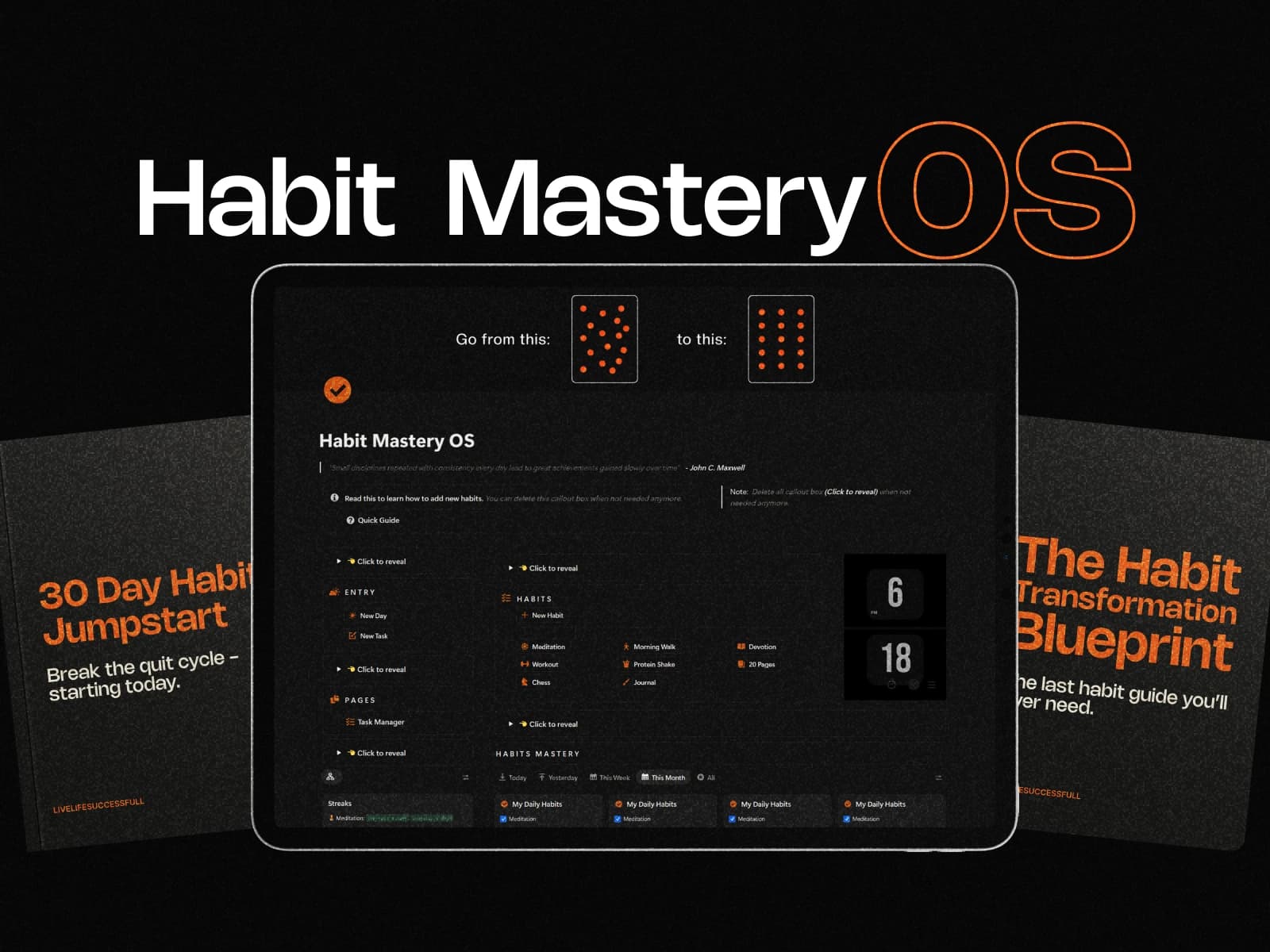
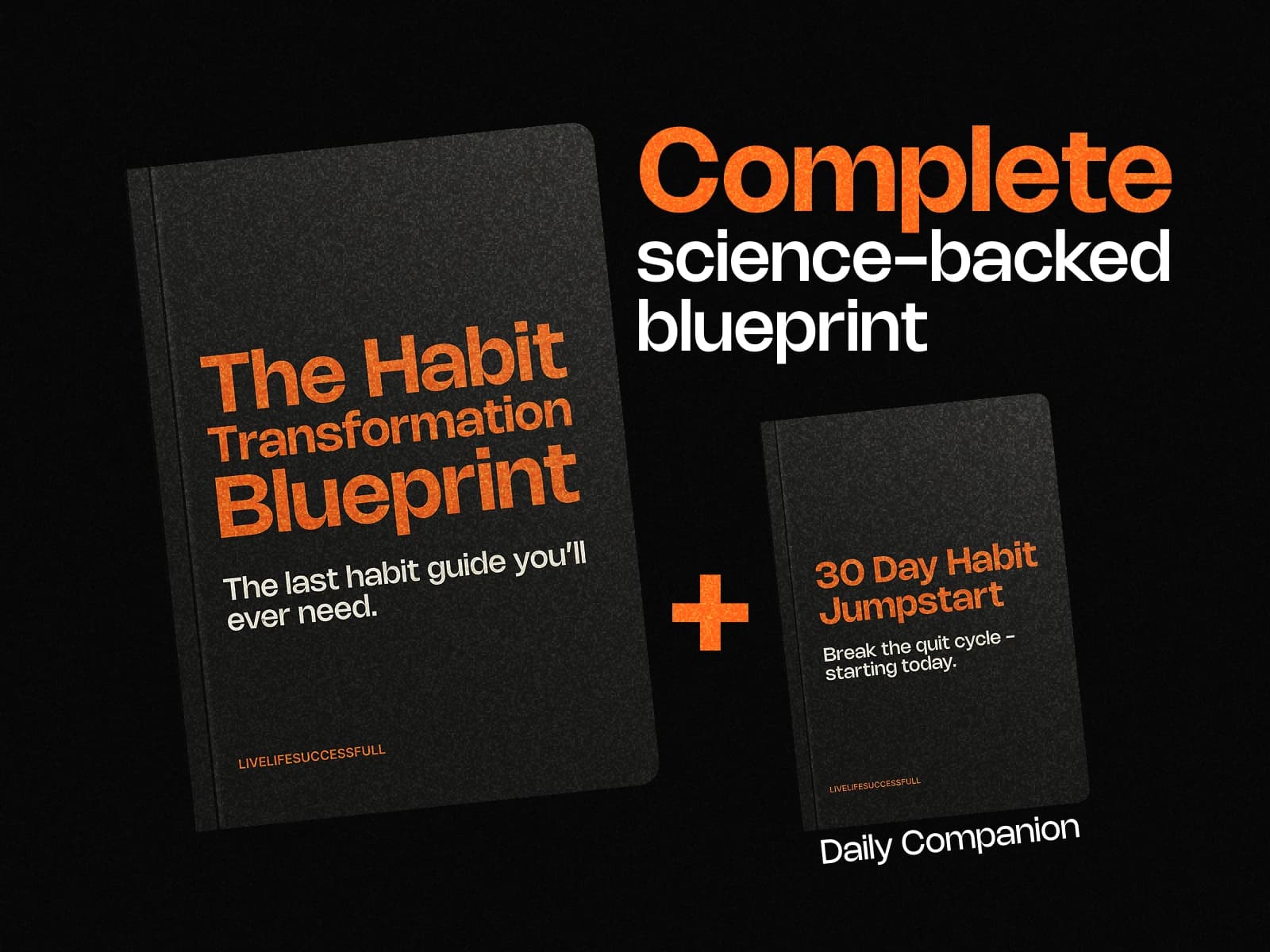
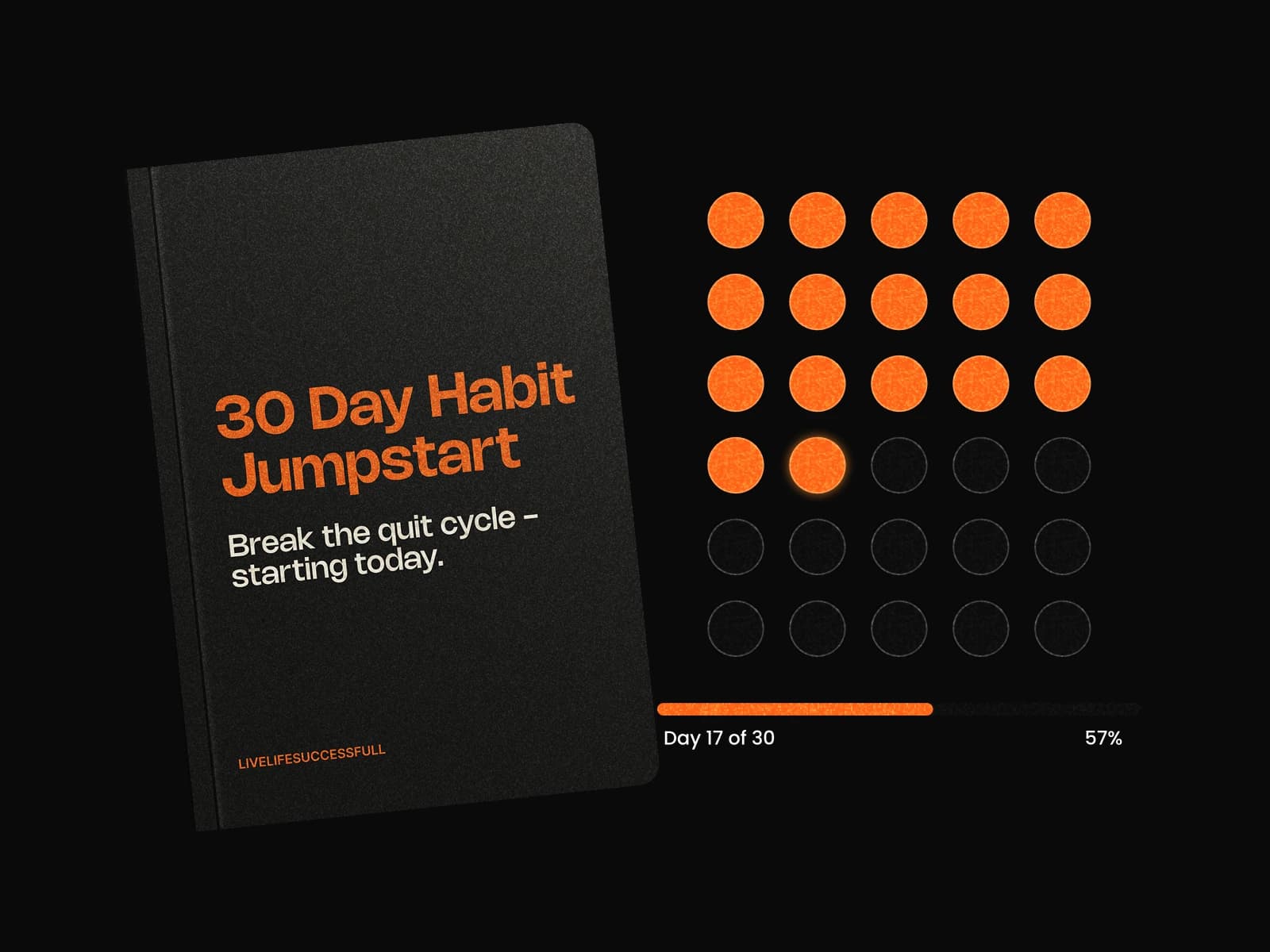
Habit Mastery OS (Dashboard + Habit Transformation Blueprint). Bonus: “The 30-Day Habit Jumpstart”
– livelifesuccessfull