The smallest habit you’re ignoring is the one reshaping your discipline
By the end of Week 2, Andy had quit.
She had bought the journal.
Set three alarms for her new 5 AM routine.
She even meal-prepped on Sunday as the YouTube guru told her to.
But by Tuesday morning, the alarms felt violent. The journal stayed blank.
“I’m just not disciplined enough,” she told herself.
If you’re reading this, you’ve probably been Andy. You have set the big goals. Felt the rush of motivation. Then, it all crumbles within weeks or days.
The problem isn’t you. It’s the approach.
Why Big Goals Backfire (And Your Brain Fights Them)
Your brain is a survival machine. When you say, “I’m working out an hour daily starting tomorrow,” your brain sees that as a threat to your current routine.
Research from the University of South Australia’s 2025 systematic review analyzing over 2,600 participants found that habit formation takes a median of 59 to 66 days, not the mythical 21 days you’ve been told. Some habits took as long as 335 days to become fully automatic.
“It’s important for people who are hoping to make healthier habits not to give up at that mythical three-week mark,” notes Dr. Ben Singh, lead researcher on the study.
Your ambitious morning routine is never just hard.
It’s neurologically inefficient.
The Dopamine Loop That Makes Micro-Habits Stick
Your brain runs on a simple reward system: dopamine.
Every time you complete a task, no matter how small, your brain releases dopamine. That dopamine doesn’t just feel good. It creates what researchers call “reward learning,” strengthening the neural pathways that make you want to repeat the behaviour.
When you drink one glass of water after waking up, dopamine fires. When you do two pushups after brushing your teeth, dopamine fires. When you write one sentence in your journal, dopamine fires.
Each micro-win creates what researchers call “a success spiral.” The dopamine release reinforces the behaviour, making it easier to repeat tomorrow.
A 2024 study published in Applied Psychology: Health and Well-Being found that only 29% of participants formed strong habits by the end of a 105-day intervention.
Those who succeeded focused on consistent, cue-triggered repetition.
Decision Fatigue Is Killing Your Discipline
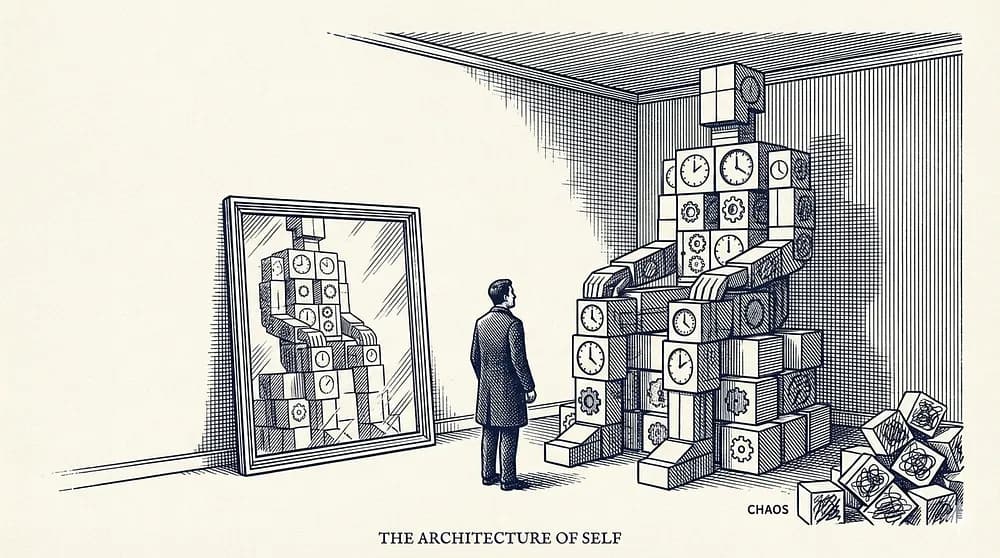
Research on decision fatigue shows that the quality of our decisions degrades after making multiple choices throughout the day. In a famous study by Danziger, Levav, and Avnaim-Pesso published in Proceedings of the National Academy of Sciences, researchers found that judges’ favourable rulings dropped from approximately 65% to nearly zero within each decision session and returned abruptly to 65% after a break.
When you create habits that require constant decision-making,
“Should I work out today? How long? What exercises?”
You’re draining the same mental resources you need for work, relationships, and life.
Micro-habits bypass this entirely. They’re so small and specific that they don’t require decisions. You just do them.
Why Systems Beat Motivation Any Time & Every Time
Motivation is a feeling. Systems are a structure.
Motivation says, “I’m going to read 30 pages every day!” A system says, “I read one page with my morning coffee.”
Motivation says, “I’m hitting the gym 5 days a week!” A system says, “I do two pushups after brushing my teeth.”
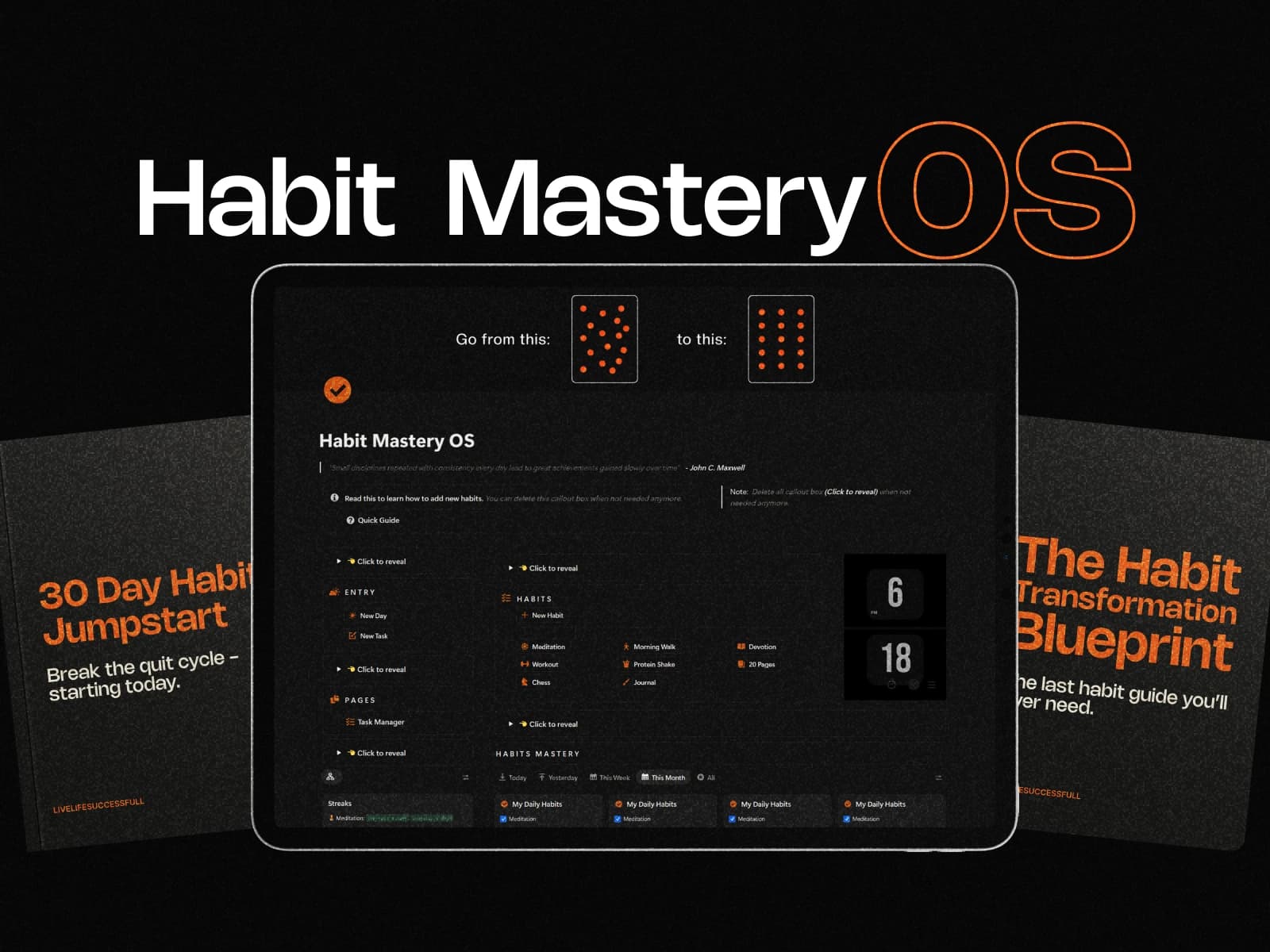
The Habit Mastery System changes everything. Instead of relying on fleeting motivation, you build a framework that makes good behaviours inevitable. You’re not trying harder. You’re designing a system where micro-habits stack naturally.
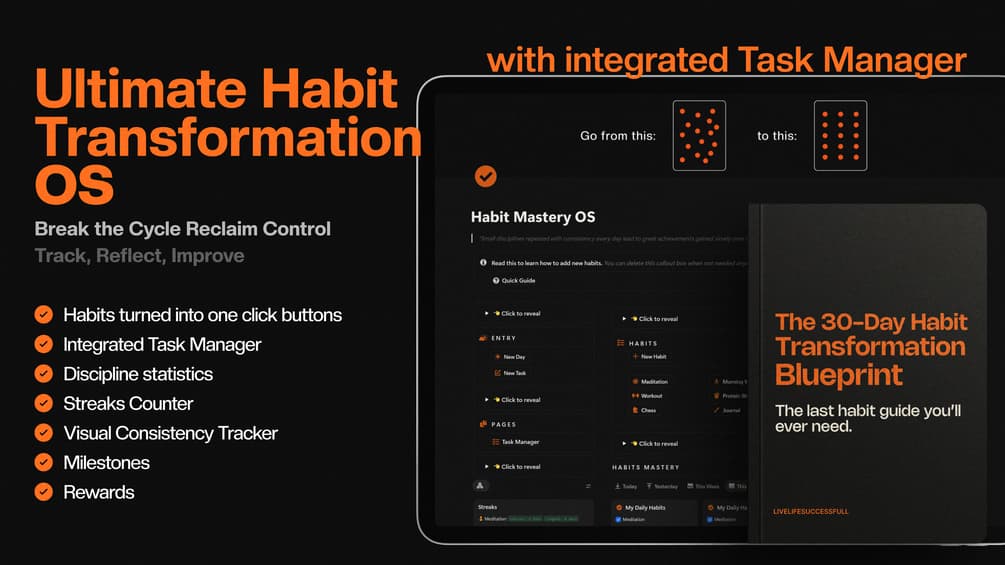
Research published in Frontiers in Psychology found that participants who practised Tiny Habits showed statistically significant improvements compared to control groups.
The key? Making habits so small that compliance was almost automatic.
The Real Science Behind Habit Stacking
Here’s how micro-habits compound:
Week 1: You drink water after your alarm. That’s it. Week 2: Water feels automatic. You add a 30-second stretch while the coffee brews. Week 4: Both habits run on autopilot. You add one journal sentence before bed. Week 8: You have a morning routine, an energy boost mid-day, and an evening wind-down all built without willpower.
This is not just a theory. Research in neuroscience shows that dopamine-dependent synaptic plasticity initially drives habit formation. The behaviour then becomes wired into your brain’s basal ganglia, the region responsible for automatic actions.
The Habit Mastery System leverages this neuroscience.
How Students, Professionals, and Entrepreneurs Can Start Today
Whether you’re a student building study habits, a young professional establishing morning routines, or an entrepreneur trying to maintain consistency, the same principles apply:
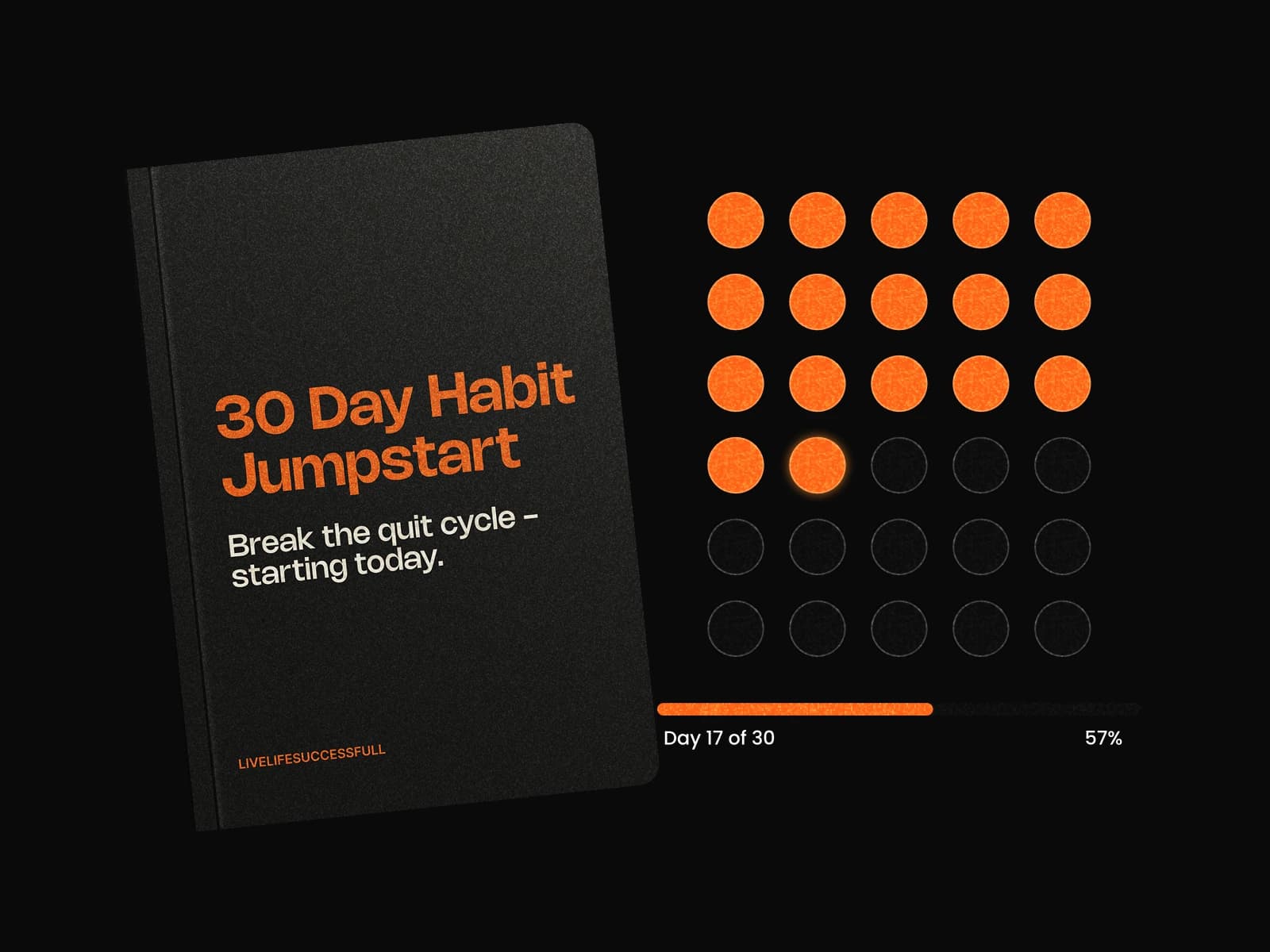
Start ridiculously small. Anchor to existing habits. Track without judgment. A simple checkmark creates accountability without pressure. Research shows that visible tracking increases habit adherence by 58%.
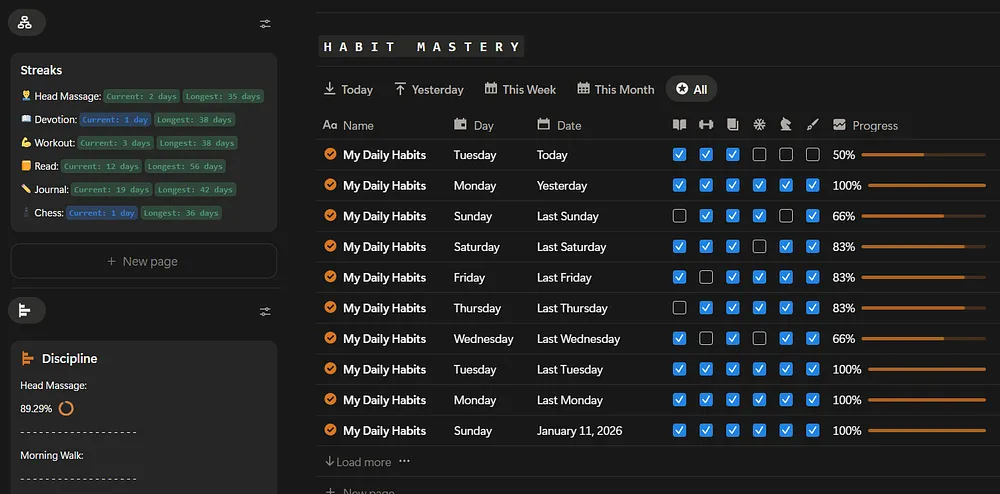
Scale naturally. Once a micro-habit becomes automatic, your brain will naturally want to expand it. One page becomes five. Two pushups become ten.
The System That Replaces Willpower
You fail at habits because you are fighting your biology.
You set massive goals. Your brain resists. Decision fatigue sets in. Motivation fades, and ultimately, you quit.
Then you blame yourself for lacking discipline.
When you build habits through micro-actions, you’re working with your brain’s dopamine system, not against it. You’re reducing decision fatigue. You’re creating predictability. You’re stacking small wins into compound change.
This isn’t about being motivated. It’s about being systematic.
Students who master this build study routines that last through finals. Young professionals who master this show up consistently in their careers. Creators who master this produce work even on low-energy days. Entrepreneurs who master this maintain focus when everything feels chaotic.
Your Next Micro-Habit
Big change doesn’t happen through big effort.
It happens through small, consistent actions that your brain cannot resist because they’re too easy to fail at.
You never need motivation. You need a better system.
So here’s your challenge: Pick one micro-habit this week. Make it so small it feels almost silly. Attach it to something you already do. Do it every day.
Don’t add another habit until this one sticks.
Because in two months, when this micro-habit runs on autopilot, you’ll add another. And another. And six months from now, you’ll look back and realize you’ve completely transformed your routine without relying on willpower once.
That’s the design you get in System.
And it starts with a single small action today.
So what’s the one micro-habit you’re starting tomorrow?