How My Tiny Habits Failed And Why Failure Fixed My System Faster Than Success
I woke up on January 3rd with a plan. Water bottle on the nightstand. Journal on my desk. Gym clothes lay out. This was going to be my year.
By January 10th, the water bottle had moved to the kitchen counter. The journal was buried under unopened mail. And the gym clothes? Still folded in my drawer.
If you’ve been there, you’re not alone.
Research from the University of Scranton shows that 92% of people who set New Year’s resolutions never achieve them.
What nobody talks about is that those failures are not wasted time. They’re data.
The Problem With “Tiny Habits”
The internet loves tiny habits, drink water when you wake up, journal for five minutes.
I tried 14 of these “tiny habits” over six months, but only three stuck.
The other eleven were complete flops.
Why? Because most habit advice skips the most important part, your habits need to fit YOUR life, not someone else’s.
When Good Habits Go Wrong
Let me show you what actually happened.
Habit #1: Drink water right after waking up
This one sounds foolproof. It’s literally just drinking water.
I forgot it for five days in a row.
The problem? “After I wake up” is too vague. I’d wake up, grab my phone, check messages, and boom, habit forgotten.
No trigger No anchor Just good intentions floating in the void
I had zero plan. I had a wish.
Habit #2: Journal every night before bed
Lasted only four days.
Why it failed: I was already exhausted by bedtime. Adding one more task felt like homework I didn’t want to do.
It turns out that timing matters more than we think. A 2025 study on habit formation found that morning routines have 43% higher success rates than evening routines. Your energy levels aren’t just a minor detail, they’re the foundation.
Habit #3: Read 10 pages a day
Started strong. Dead by week two.
The problem was never the reading. It was the pressure.
On busy days, 10 pages felt like a commitment I couldn’t keep. So I’d skip it. Then skip it again. Then stop entirely.
Research on habit formation shows that simpler behaviours become automatic faster than complex ones. Daily flossing (simple) forms faster than maintaining a complex exercise routine.
My “tiny” habit had too much friction built in.
The Real Issue: Systems Beat Motivation
What most people never understand about habits.
They’re not about discipline. They’re not about willpower. They’re about design.
Research tracking habit formation over 90 days found that the key factor was not self-control, it was consistency. And consistency doesn’t come from trying harder. It comes from removing friction.
That’s where most habit advice falls apart. It gives you the habit but not the system.
You’re told to “drink more water”, but not where to put the bottle so you actually see it.
You’re told to “exercise daily”, but not how to anchor it to something you already do.
You’re told to “journal regularly”, but not when your brain actually has the energy for it.
What Actually Worked (And Why)
After 11 failed attempts, three habits finally stuck.
Making my bed: Takes 30 seconds. Gives me an instant win before the day starts. The trigger is automatic: my feet hit the floor.
Phone across the room at night: I can’t scroll in bed if I have to get up. Removed the temptation entirely.
Laying out gym clothes the night before: This required less thinking on the morning. It removed the friction to get ready for the gym.
Why did these work when the others didn’t?
They were Simple, Low effort, and tied to something I already do.
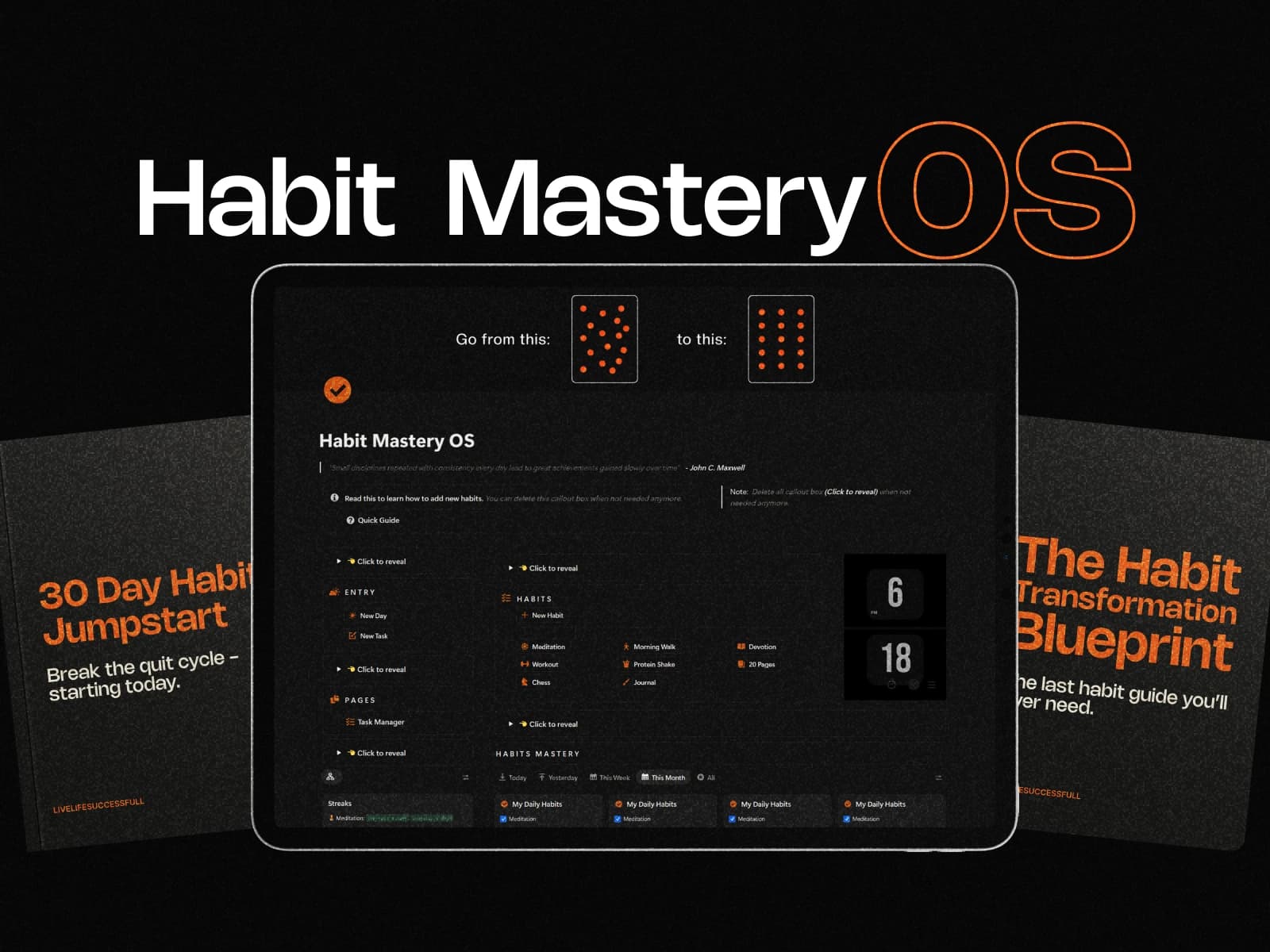
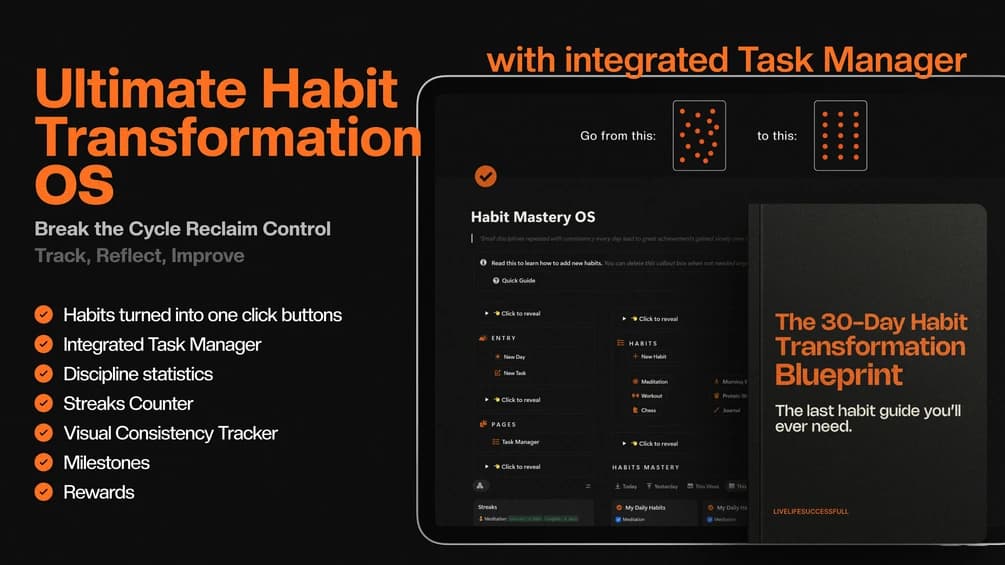
The Habit Mastery System: Building What Actually Fits Your Life
You don’t need more habits. You need better systems.
A system isn’t just a list of things to do. It’s the infrastructure that makes doing them inevitable.
Think about it. You don’t forget to charge your phone because you have a system, plug it in before bed. You don’t forget to lock your door because the trigger is built in, leaving the house.
The Habit Mastery System works the same way. It’s about designing habits that fit your routine, your energy, your brain, not forcing yourself into someone else’s template.
You can use the same System that 1000+ others used to design the habits that fit their's life.
Failed Habits Are Not Failures: They are Feedback
Let me be clear about something.
Those 11 habits that flopped? They weren’t wasted time. Each one told me something valuable.
- Water after waking up taught me I need visual triggers.
- Night time journaling taught me to respect my energy levels.
- Reading 10 pages taught me that lower barriers work better than high standards.
When a habit fails, you learn:
- Is the timing wrong?
- Is there too much friction?
- Do I have a clear trigger?
- Does this actually fit my life?
Those answers are worth more than any motivational quote.
The Data Never Lies
The statistics on habit formation are sobering.
Research shows it takes an average of 66 days for a new behaviour to become automatic, but the range is huge: 18 to 254 days depending on the habit and the person.
88% of people who set New Year’s resolutions fail by the end of the year, according to a 2007 study tracking 3,000 people by Richard Wiseman at the University of Bristol.
23% quit their goals by the end of the first week of January.
But here’s the interesting part: research also shows that self-selected habits have 37% higher success rates than externally imposed ones.
Translation? The habits you choose because they fit YOUR life work better than the habits you think you “should” do.
Building Your Own System
You don’t need to copy my habits. You need to design yours.
Start simple:
- Pick one habit.
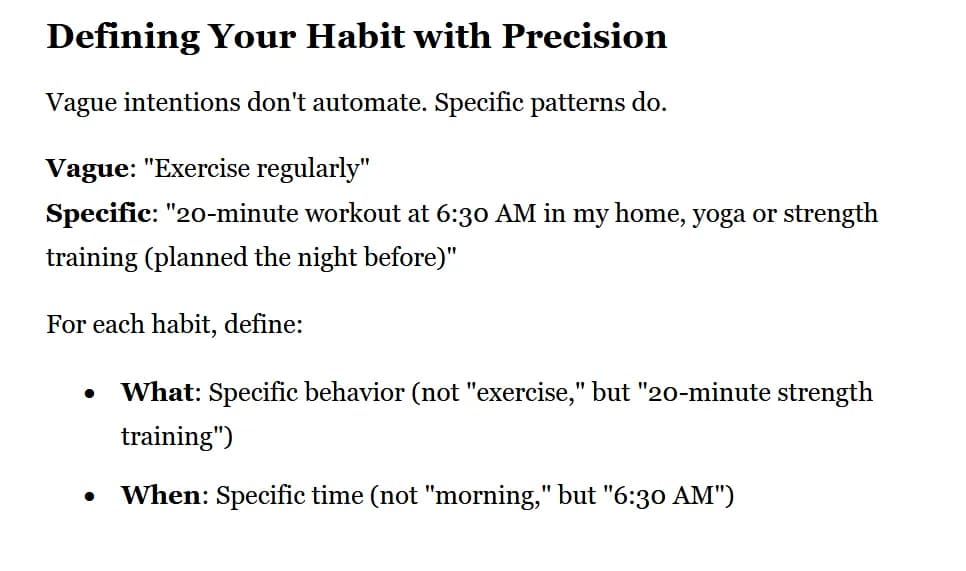
- Make it stupidly easy. So easy you can’t say no.
- Anchor it to something you already do. Not “in the morning.” After you turn off your alarm. After you close your laptop. After you pour coffee.
- Remove friction. Put the thing you need where you’ll see it.
- Track what happens. Not to judge yourself. To learn.
The Habit Mastery System isn’t about perfection. It’s about pattern recognition. It’s about building a framework that actually works instead of fighting yourself to make someone else’s framework fit.
I Wish Someone Has Told Me This Before
Here’s what I wish someone had told me six months ago when I started this whole habit experiment.
Failed habits aren’t evidence that you lack discipline. They’re evidence that you’re testing what works.
Every habit that flops gives you information.
- Wrong time
- Too much friction
- No clear trigger
- Not aligned with your actual life.
That information is gold.
Because you don’t build lasting habits by trying harder. You build them by designing better.
Systems beat motivation every single time. And the best system is the one you build for yourself not the one you borrowed from someone who lives a completely different life.
So stop beating yourself up about the habits that didn’t stick.
What’s one tiny habit that flopped for you, and what did it teach you about how you actually work?
Grab the System that 1000+ others used to design the habits that fit YOUR life.